
The Perfect 2-Day Zermatt Itinerary: Where to Stay, What to See & Insider Tips
Why Visit Zermatt?
If you’re planning a trip to Switzerland, there’s a good chance Zermatt is already on your itinerary. Home to the iconic Matterhorn, this charming mountain village is one of the most beautiful places in the country and offers some of the best hiking, viewpoints and alpine scenery in Europe.
We recently spent two days exploring Zermatt and quickly understood why so many people consider it a must-visit destination.
In this guide, we’ll show you exactly how to spend two days in Zermatt, including where to stay, what to see, and a few tips we wish we knew before visiting.
Why Zermatt should be on every Switzerland itinerary
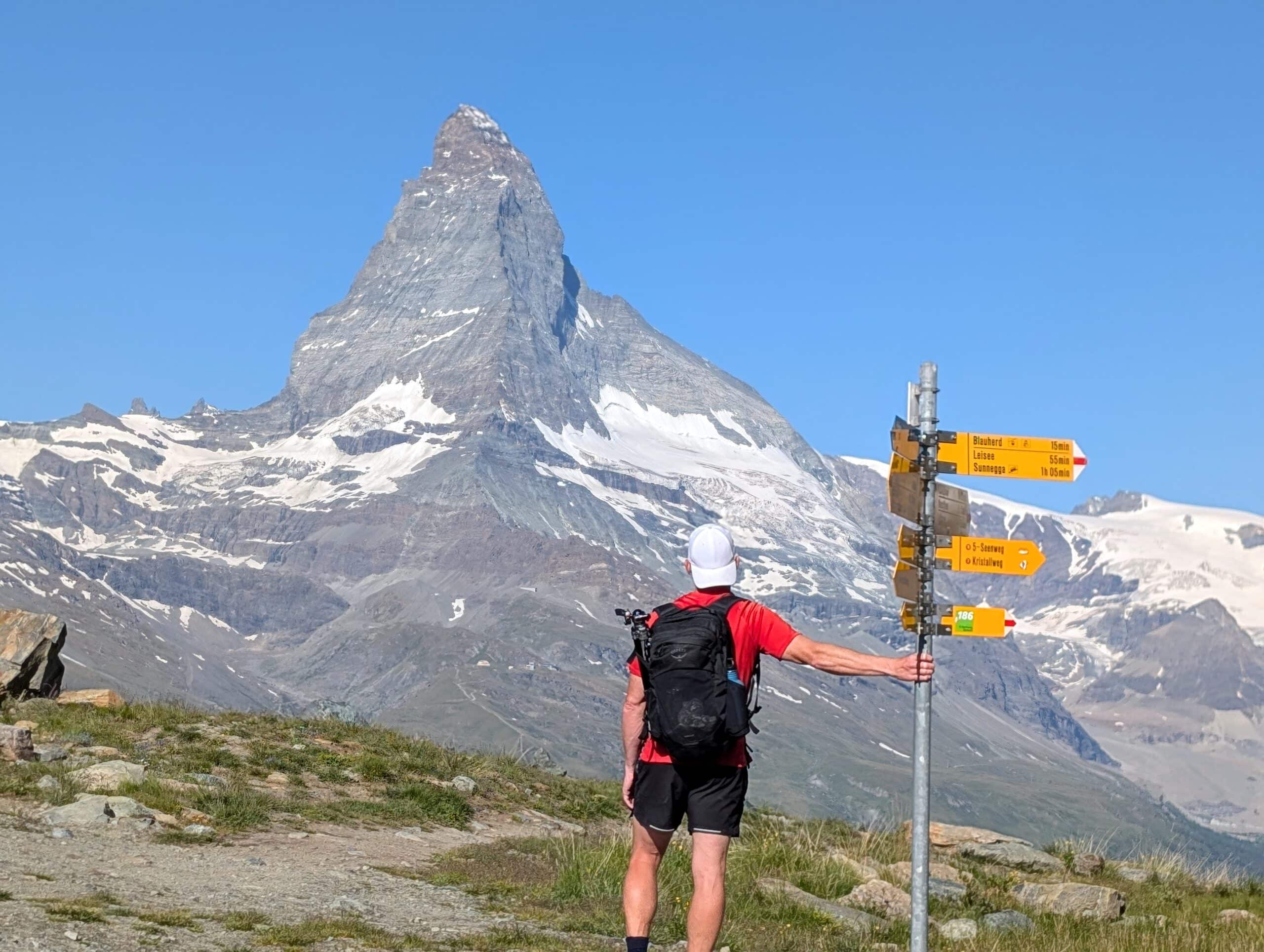
In our opinion, every Switzerland itinerary should include at least one car-free mountain village, and Zermatt is the perfect choice. There’s something incredibly relaxing about wandering the streets without having to think about traffic. Instead of cars, you’ll hear church bells, the sound of the Matter Vispa River, and the occasional electric taxi making its way through town.
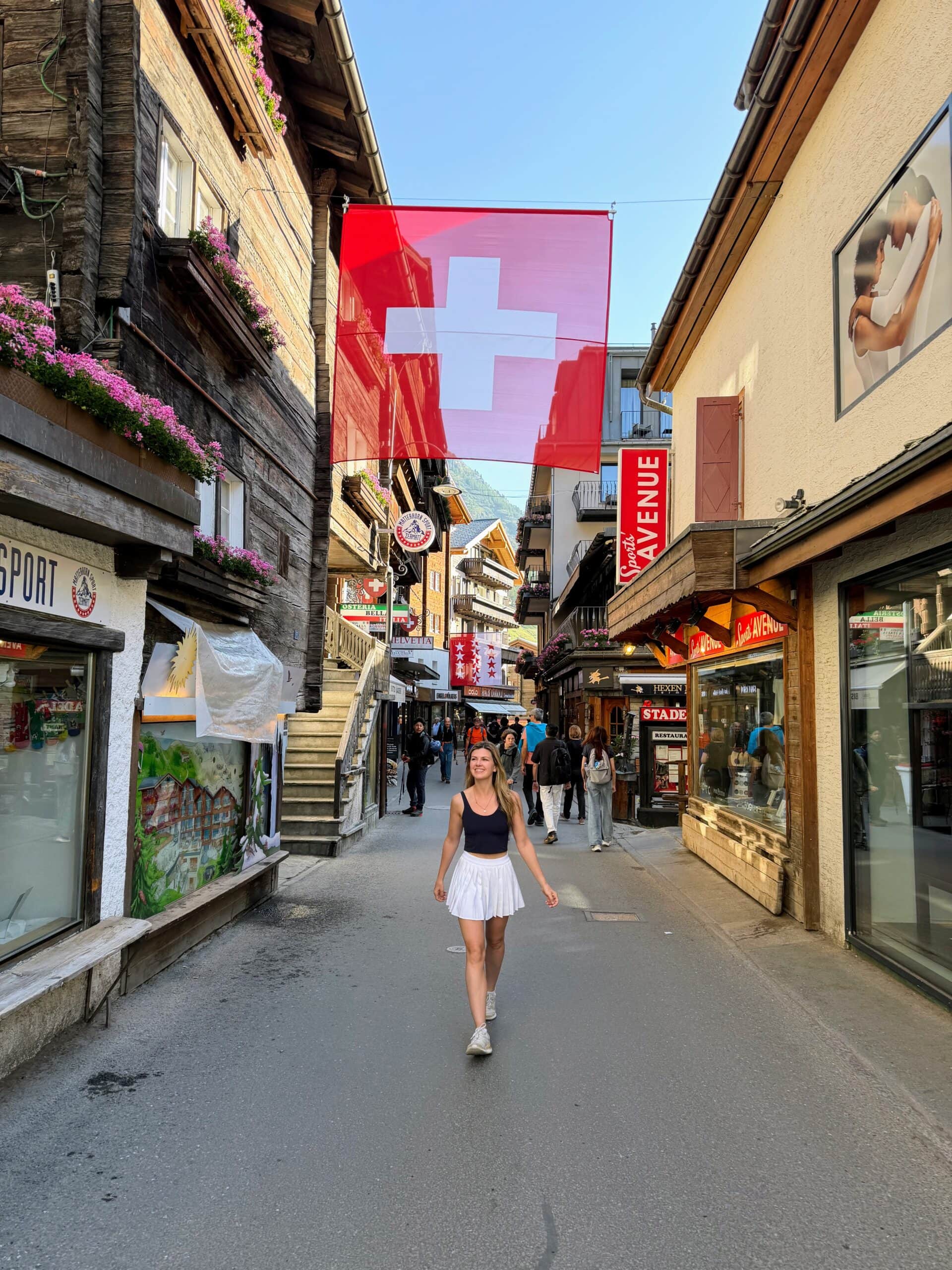
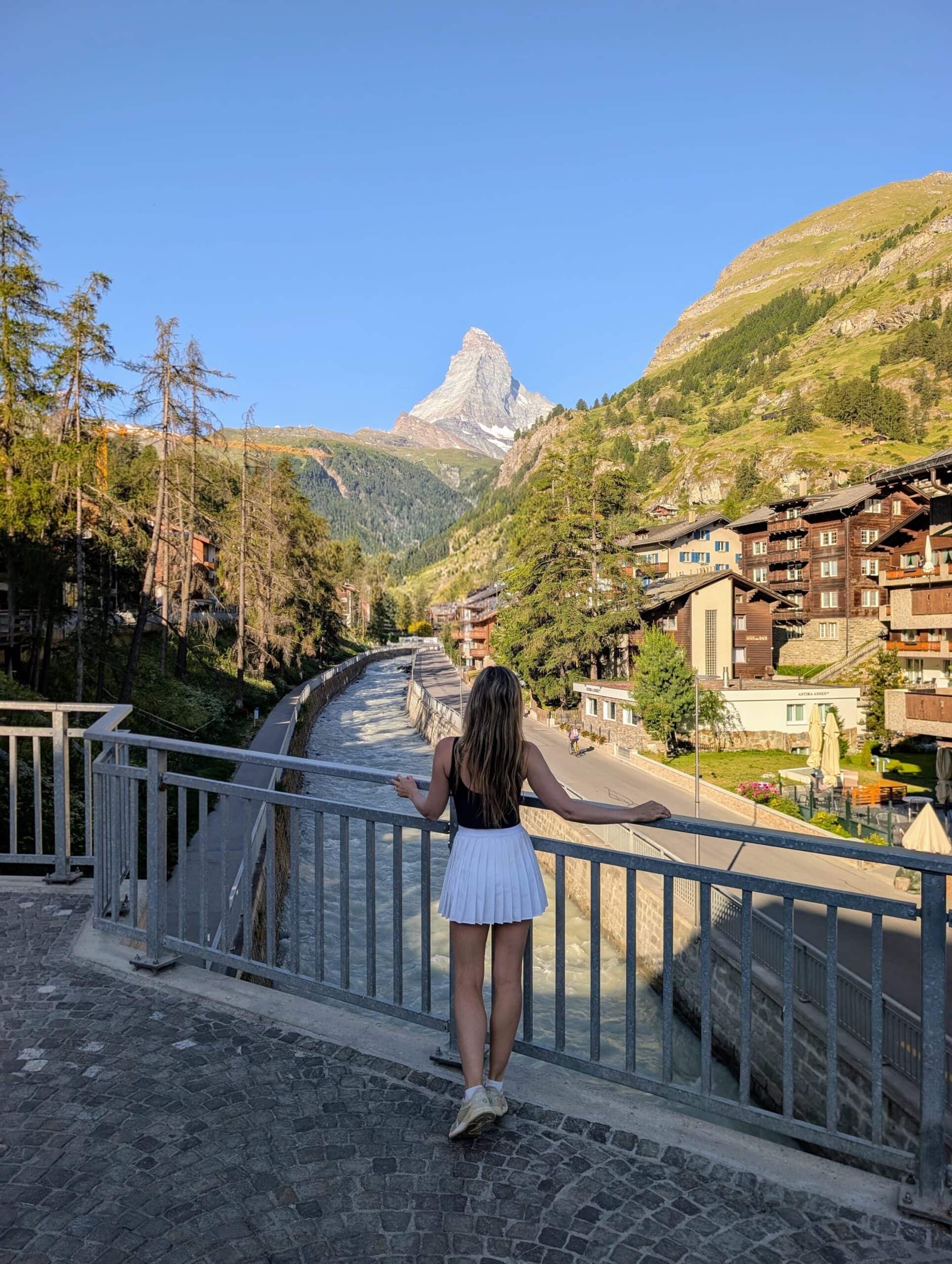
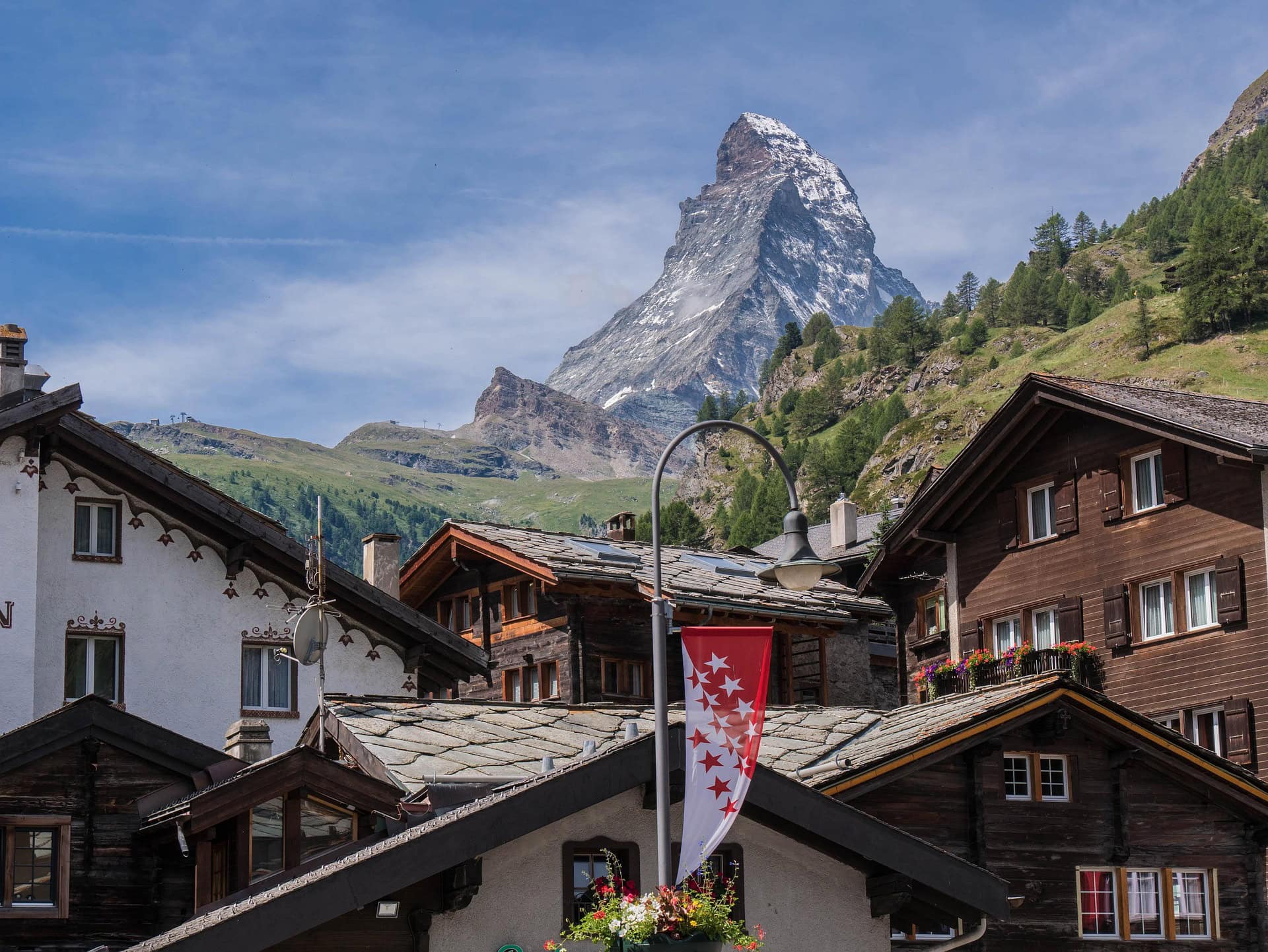
Beyond the village itself, Zermatt is home to some of the most spectacular scenery in Switzerland. The iconic Matterhorn, one of the world’s most recognizable mountains is visible from almost everywhere right in town. Whether you are looking to hike the famous reflection lake or just soak in some alpine town atmosphere, it’s one of those places that feels just as impressive in person as it does in the photos.
What makes it different from Lauterbrunnen, Grindelwald
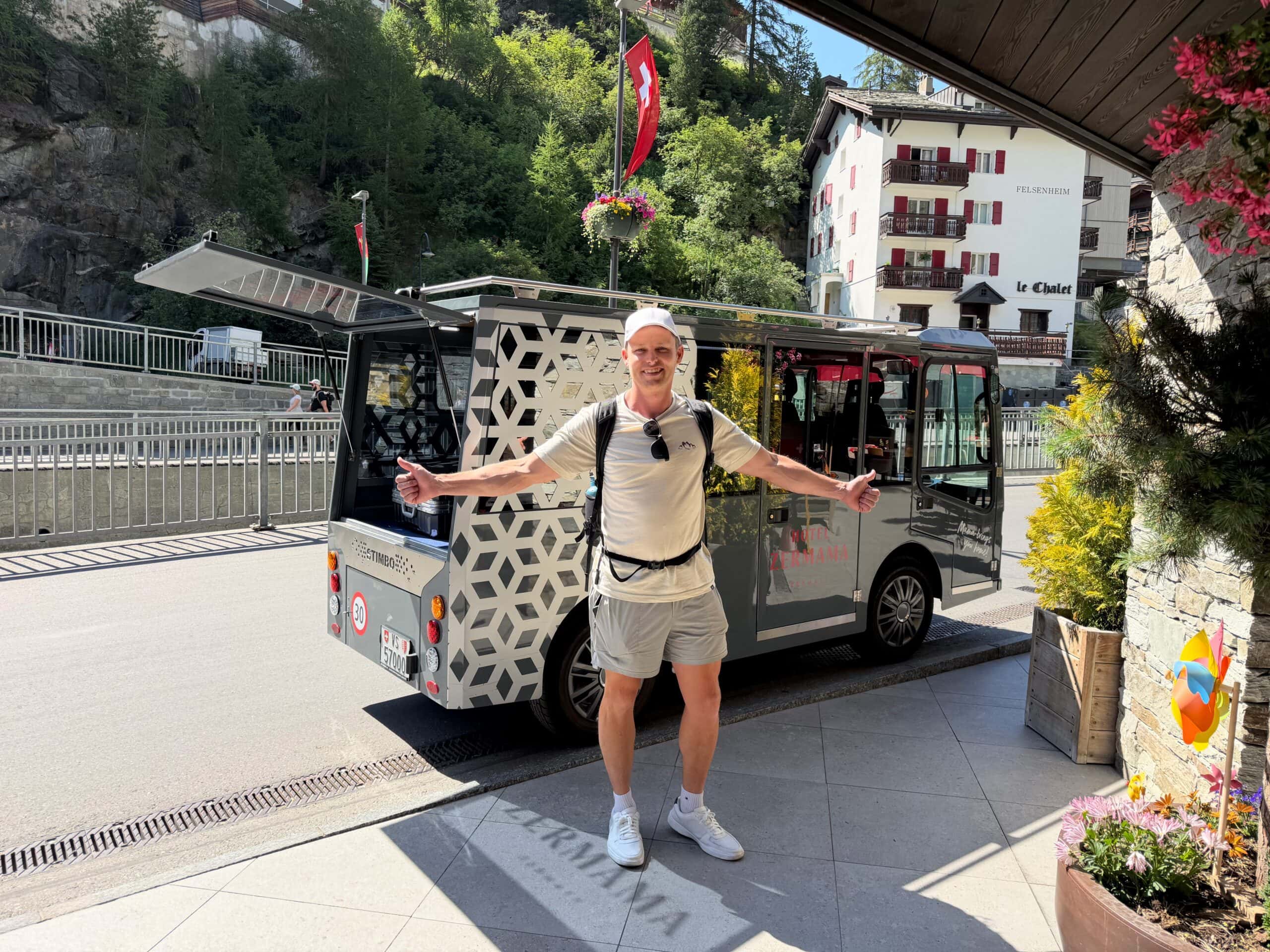
Zermatt is special because it truly is car free. Even though Lauterbrunnen and Grindelwald are great to walk around, there are still buses and traffic and it doesn’t have the same feel.
Why two days is the perfect amount of time
Let’s be real, vacation time isn’t endless and if you’re travelling all the way to Switzerland you want to make sure you can see as much as you can. Two nights is the perfect pace to see the highlights. If you have more time you can absolutely spend longer in Zermatt. The hikes are almost endless, the area itself is stunning and the town is a super cute place to grab a drink and hangout.
2-Day Zermatt Itinerary at a Glance
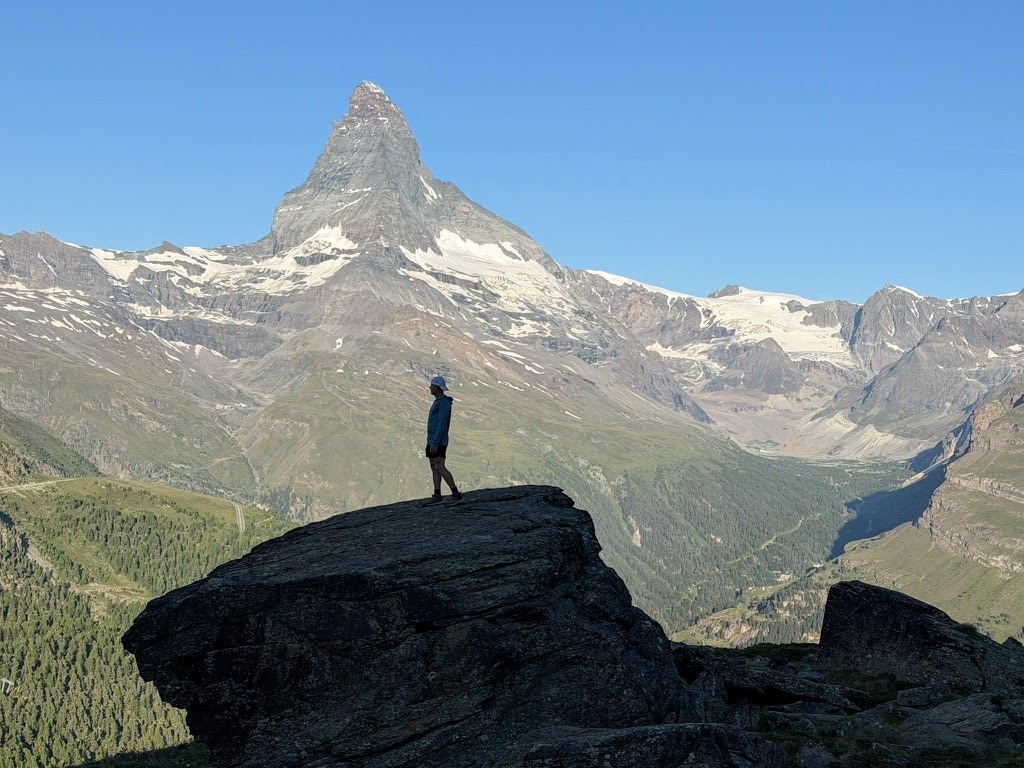
Itinerary Overview
This itinerary is perfect for the faster paced traveller who likes to stay busy. If you are looking to slow down and take in the views this can easily be stretched to a comfortable 3 night pace!
Day 1 Overview
- Arrive in Zermatt
- Check into Hotel Zermama
- Explore the Old Town
- Walk along the Matter Vispa River
- Optional Zermatt Gorge
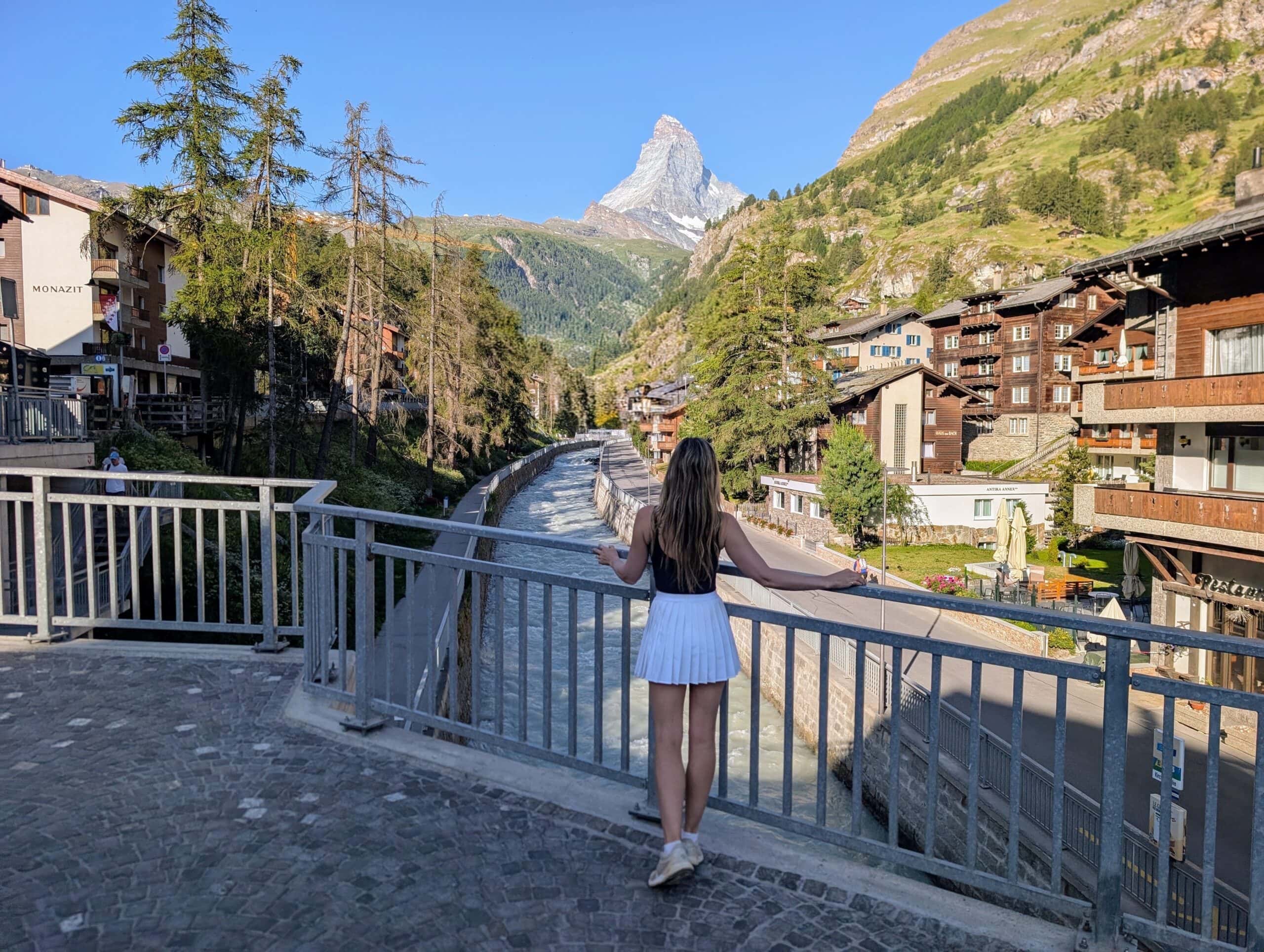
- Sunset at Kirchbrücke
- Dinner
Day 2 Overview
- Early train or bike to Sunnegga
- Sunrise at Stellisee
- Hike the Five Lakes Trail
- Optional Gornergrat Railway
- Return to Zermatt
Planning Your Trip to Zermatt
How to Get to Zermatt
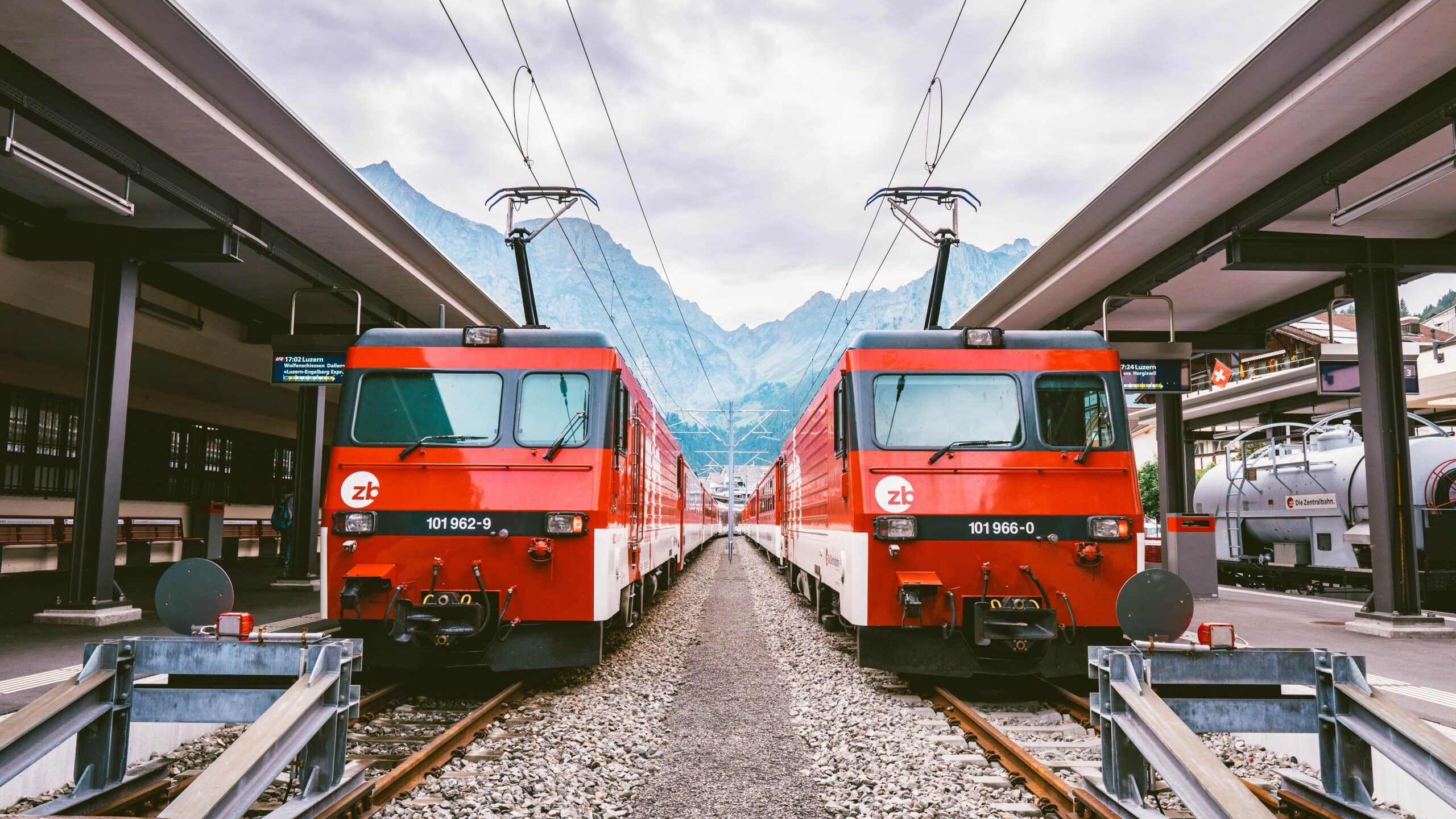
As there is no road to Zermatt, it is most easily reached by train. It has great connections from almost all centers in Switzerland.
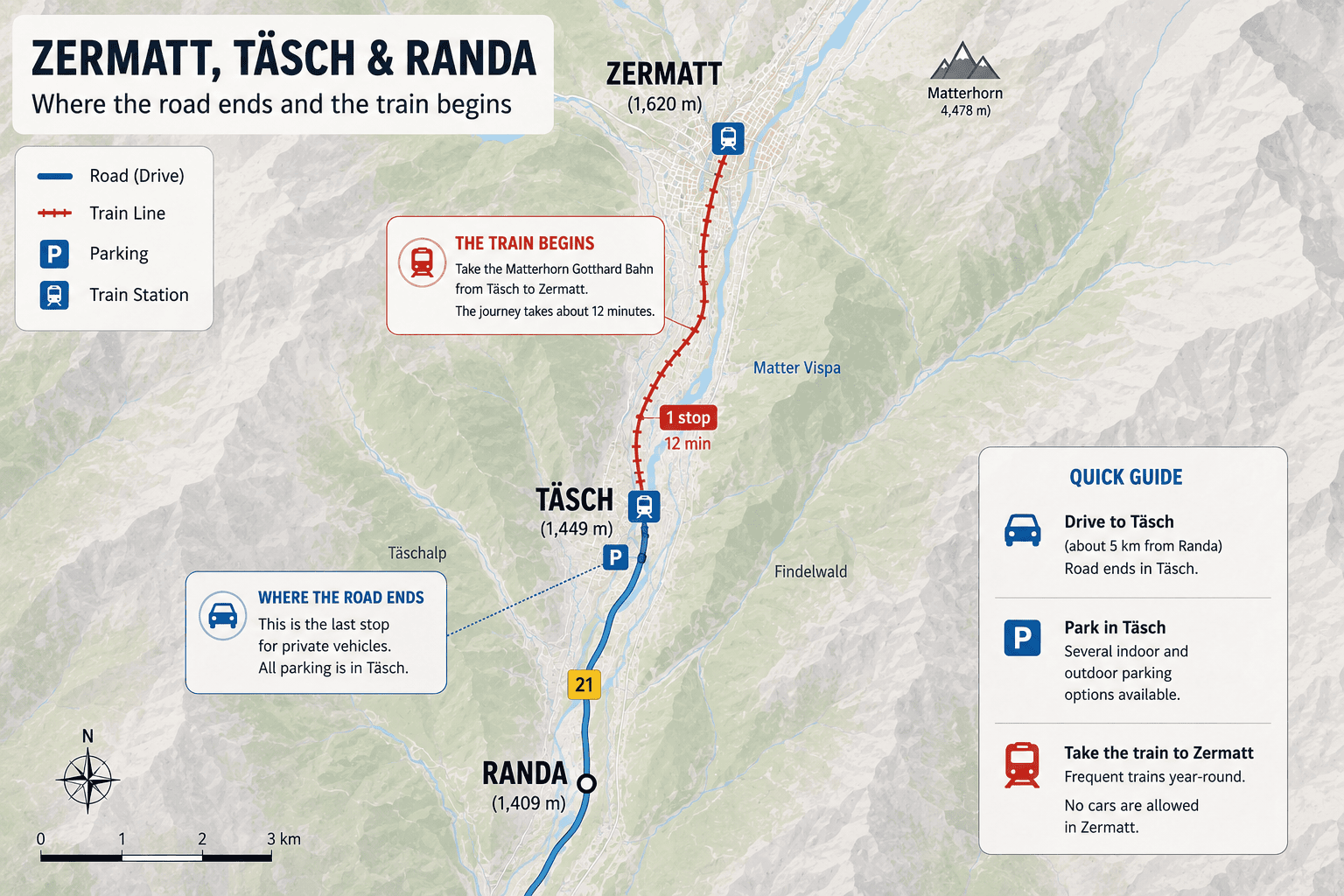
From the town of Tasch to Zermatt – The train leaves roughly every 20 minutes and you can buy a return ticket for CHF 17.20 here or at the station. The ride takes about 12 minutes with the first train leaving at 5:55 AM and the final returning at 1 AM.
From Randa to Zermatt – The trains start and end slightly earlier with a cost of 29.60 CHF
Where to Park Before Visiting Zermatt
If you have a rental car or camper the most common option is to take the train or “shuttle” from the town of Tasch or Randa. The train is subsidized from Tasch to Zermatt so it is slightly cheaper than taking the train from Randa.
Despite this, parking in Randa is far cheaper for campers so it all depends on how long you will be visiting for! We elected to park in Randa as we were staying a full two nights so it made it worth it.
TLDR – If you have a camper it’s almost always cheaper to park in Randa and pay more for the train. If you have a normal sized car just go to Tasch.
Best Time to Visit Zermatt
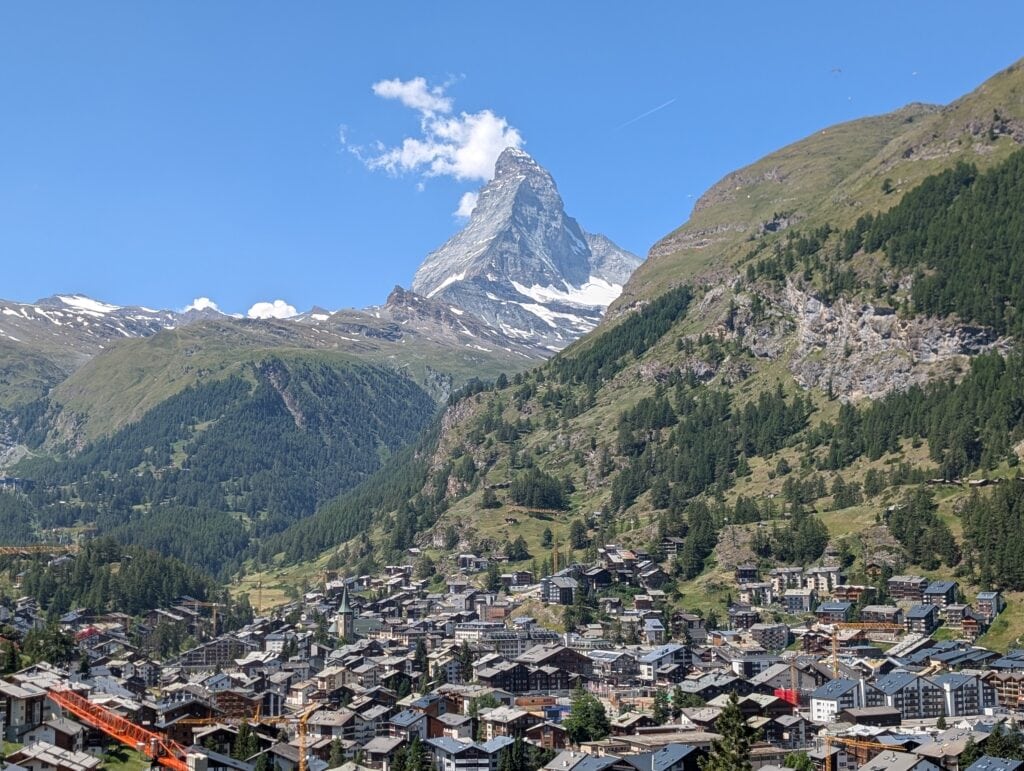
The best time to visit Zermatt depends on what you want to experience. Zermatt truly is a year-round destination. For most travellers, late June through September offers the best combination of hiking, mountain access, and pleasant weather.
We visited in early July and found it to be an ideal time to explore. The hiking trails were snow-free, the alpine lakes were accessible, and it was pleasant weather. Wildflowers were also beginning to bloom, which was great for hiking.
If hiking is your main priority, aim for June to September. During these months, you’ll have access to popular trails like the Five Lakes Trail, and mountain viewpoints such as Stellisee and Gornergrat are generally free of snow. Keep in mind that July and August are also the busiest months, so booking accommodation in advance is recommended. It should be noted that although it’s substantially less busy in June, there can still be some snow at altitude and a bit of weather instability.
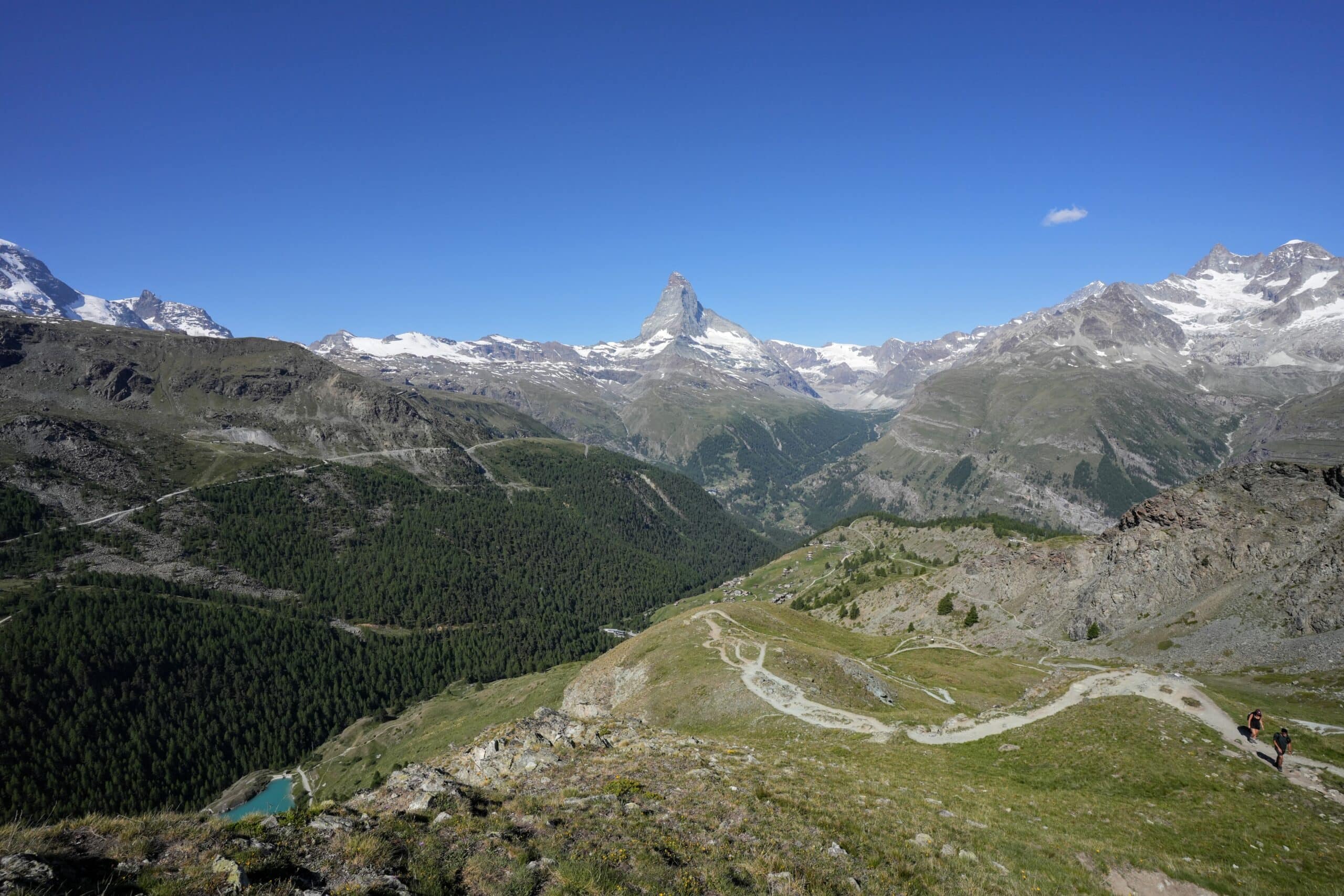
For fewer crowds and beautiful autumn colours, late September and early October can also be an excellent time to visit. The weather is often stable, the trails are quieter, and the surrounding larch forests begin to turn golden before the snow sets in.
Winter transforms Zermatt into one of Europe’s premier ski destinations. From December through March, visitors come for world-class skiing, snowboarding, and the festive atmosphere. While many hiking trails are covered in snow, the mountain views remain just as impressive, and the Matterhorn provides a stunning backdrop year-round.
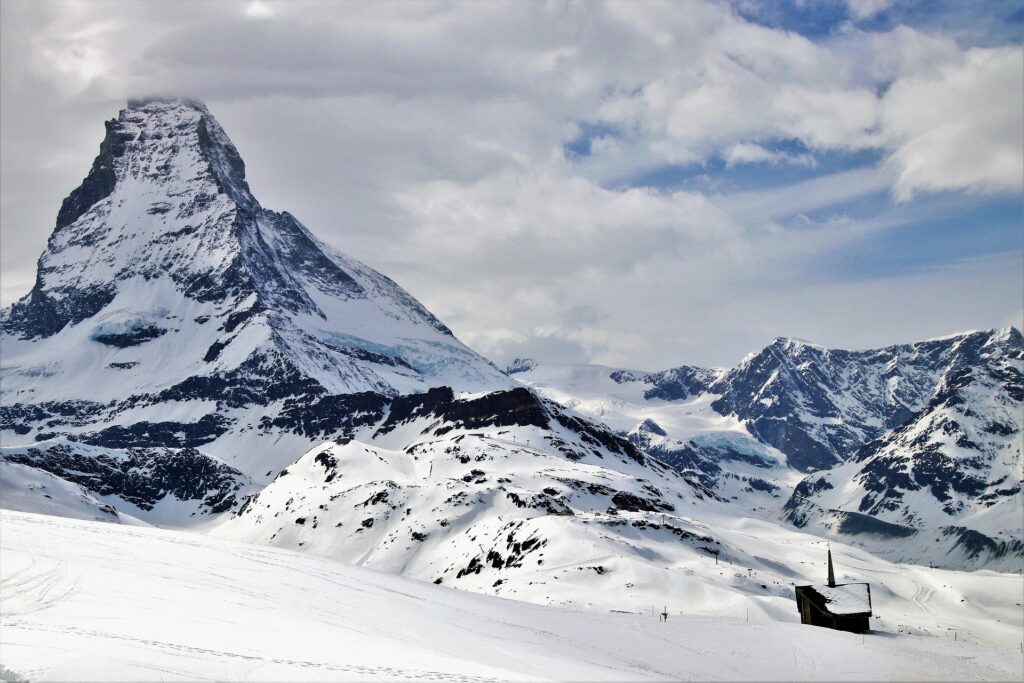
Our recommendation: If it’s your first visit to Zermatt, plan your trip between Late June and September. You’ll enjoy the best hiking conditions, have full access to the mountain lifts, and experience everything that makes Zermatt one of the most beautiful destinations in Switzerland.
How Many Days Do You Need in Zermatt?
If you have the time you can easily spend 4 days in Zermatt. For this itinerary we are going to show you how to see the best in 2.
Peak Pass vs Swiss Travel Pass: Which Should You Buy?
If you’re spending 2 days in Zermatt and plan to use the mountain lifts, the Peak Pass is usually the best value. A 2-day Peak Pass costs CHF 292 and includes unlimited rides on most of Zermatt’s lifts and mountain railways, including Gornergrat, Sunnegga, Rothorn, and Matterhorn Glacier Paradise.
The Swiss Travel Pass covers your train journey to Zermatt but only gives you a 25% discount on the Peak Pass (or varying discounts on individual mountain tickets).
Our tip: We didn’t buy the Peak Pass because we rented e-bikes and rode up to Blauherd instead, which worked out cheaper for our itinerary. However, if you plan to use multiple lifts over two days, the Peak Pass is likely worth the money.
How Much Does Two Days in Zermatt Cost?
It’s no secret that Switzerland is an expensive destination. Despite this, it’s still 100% worth it. Here is an example of a typical day in Zermatt for us.
| Expense | Typical Cost (CHF) |
|---|---|
| Hotel (mid-range) | 300–500/night |
| Peak Pass (2 days, Jun–Aug) | 260 |
| E-bike rental | 90–130/day |
| Täsch parking | 18–22/day |
| Täsch ? Zermatt shuttle | 17.20 return |
| Lunch | 20–35/person |
| Dinner | 35–60/person |
| Coffee | 5–7 |
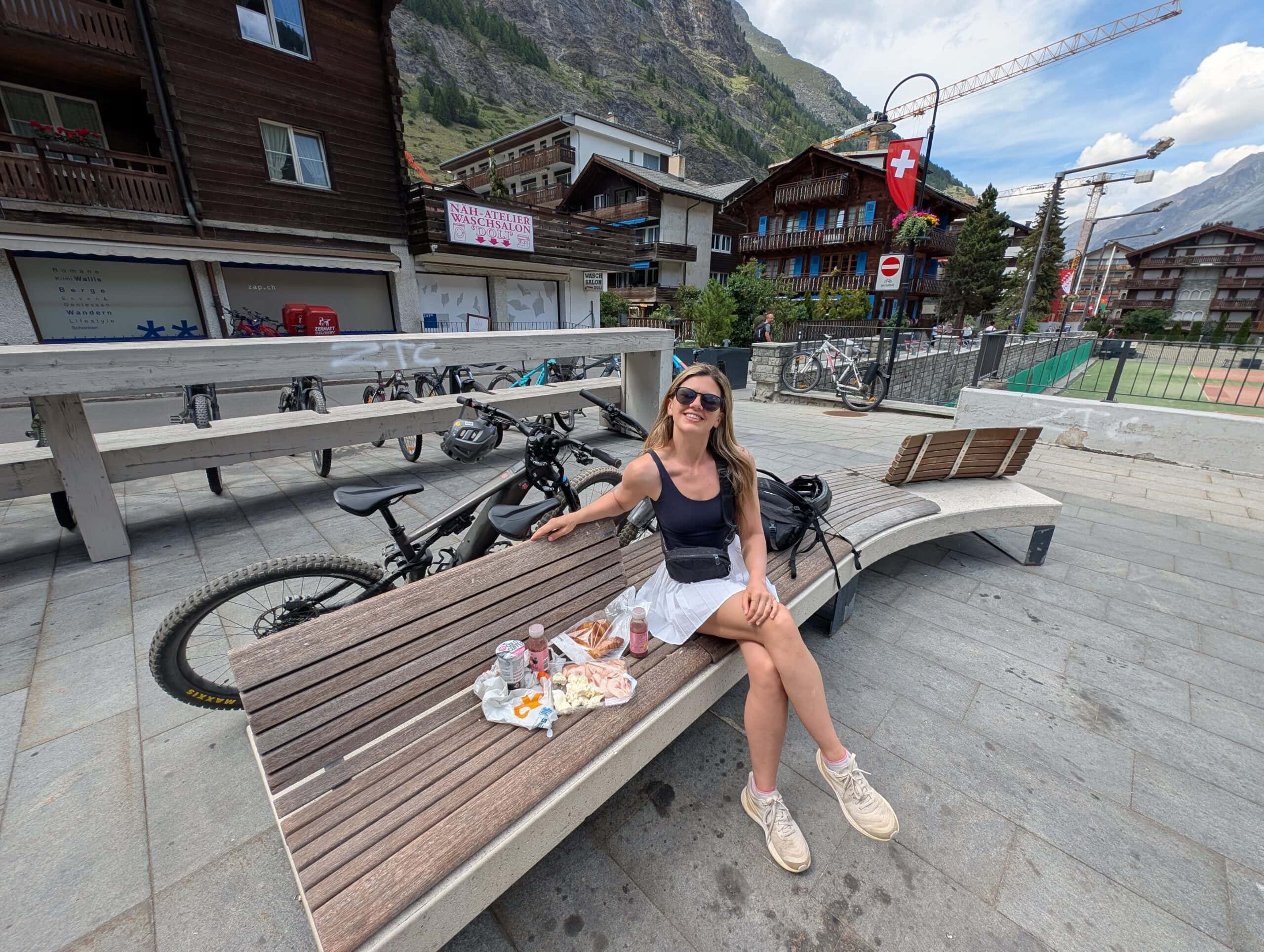
One of our favourite things to do since we are always out and about is to make sure we book a hotel with included breakfast and just grab a quick lunch on the go. One of our favourites was self-assembled croissant, mozza balls and smoked turkey sandwiches from the Co-Op. Then we spend the savings on dinner and enjoy ourselves guilt free.
Where to Stay in Zermatt
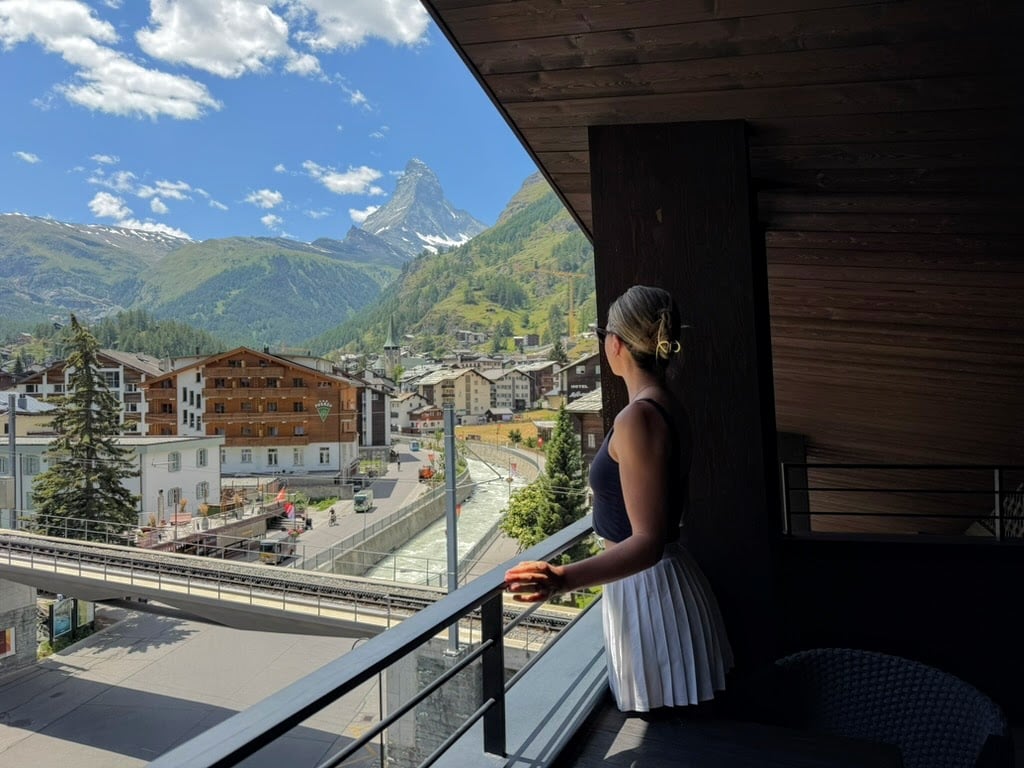
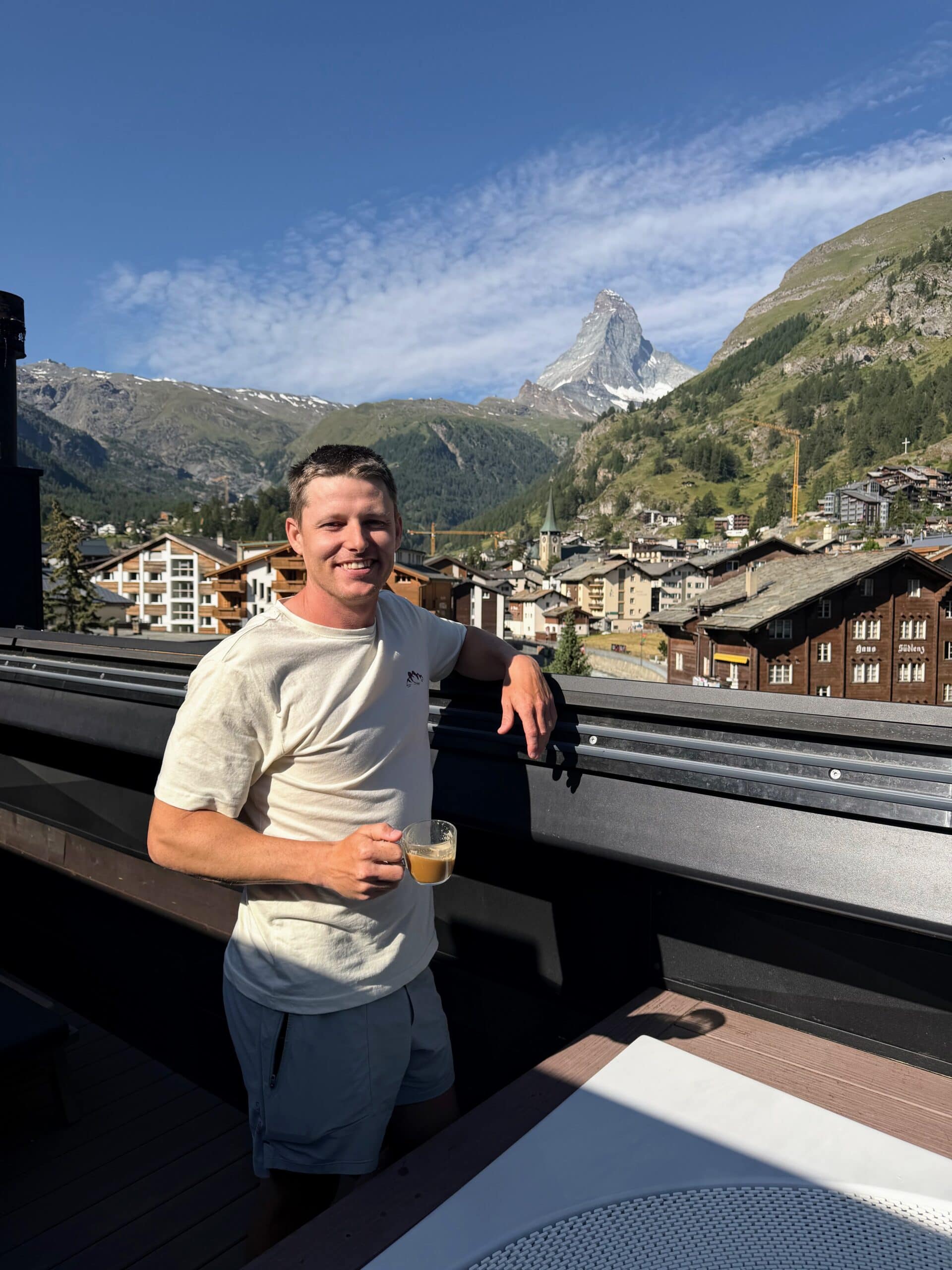
Zermatt is expensive no matter where you stay, so you might as well make it memorable. We 100% recommend booking a hotel with a Matterhorn view. Waking up each morning and seeing one of the world’s most iconic mountains right outside your window feels absolutely surreal and was one of the highlights of our trip. It’s a once-in-a-lifetime experience that’s super worth it.
TLDR stay at Zermama and book a Matterhorn view room.
Why We Stayed at Zermama
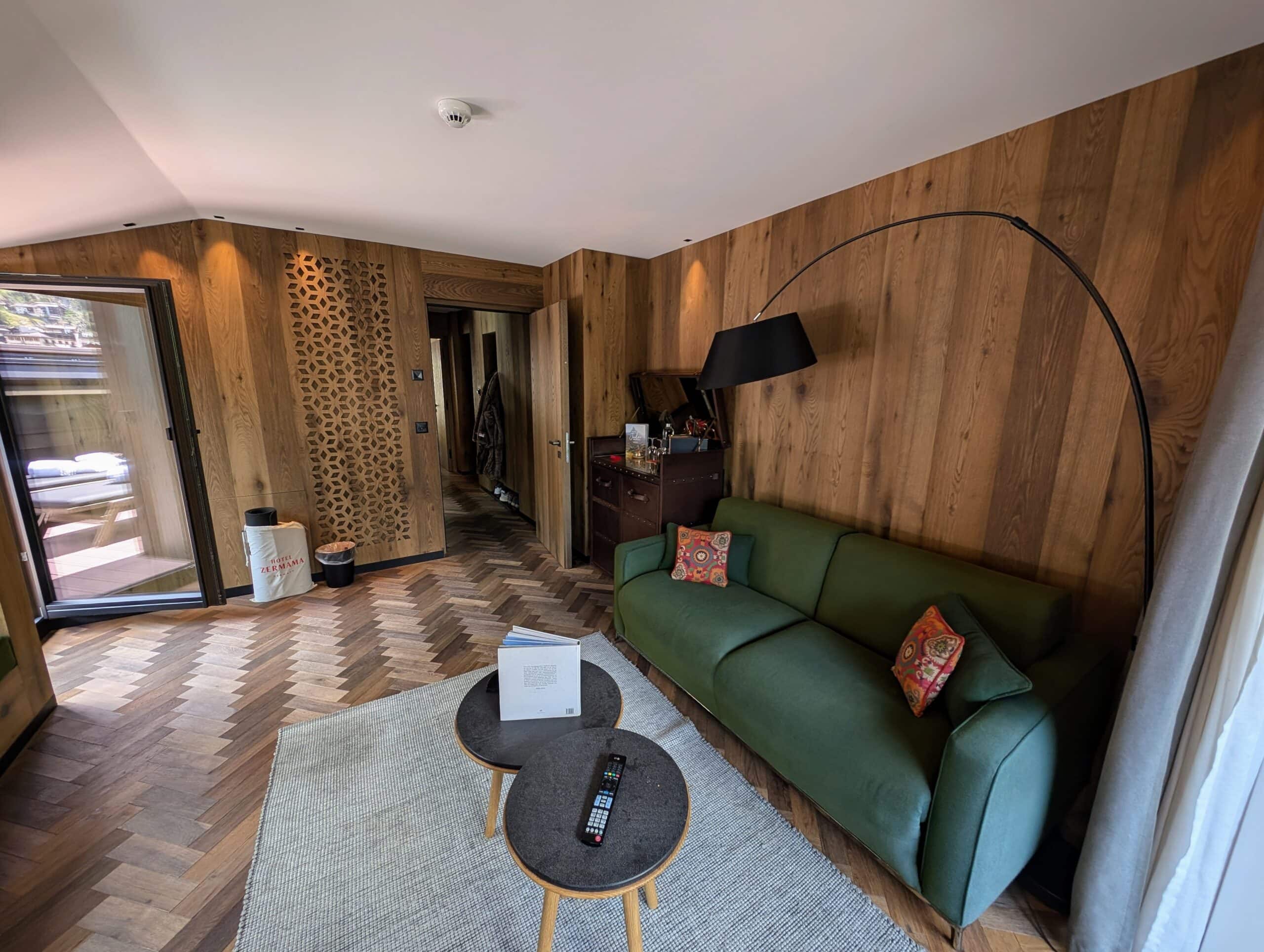
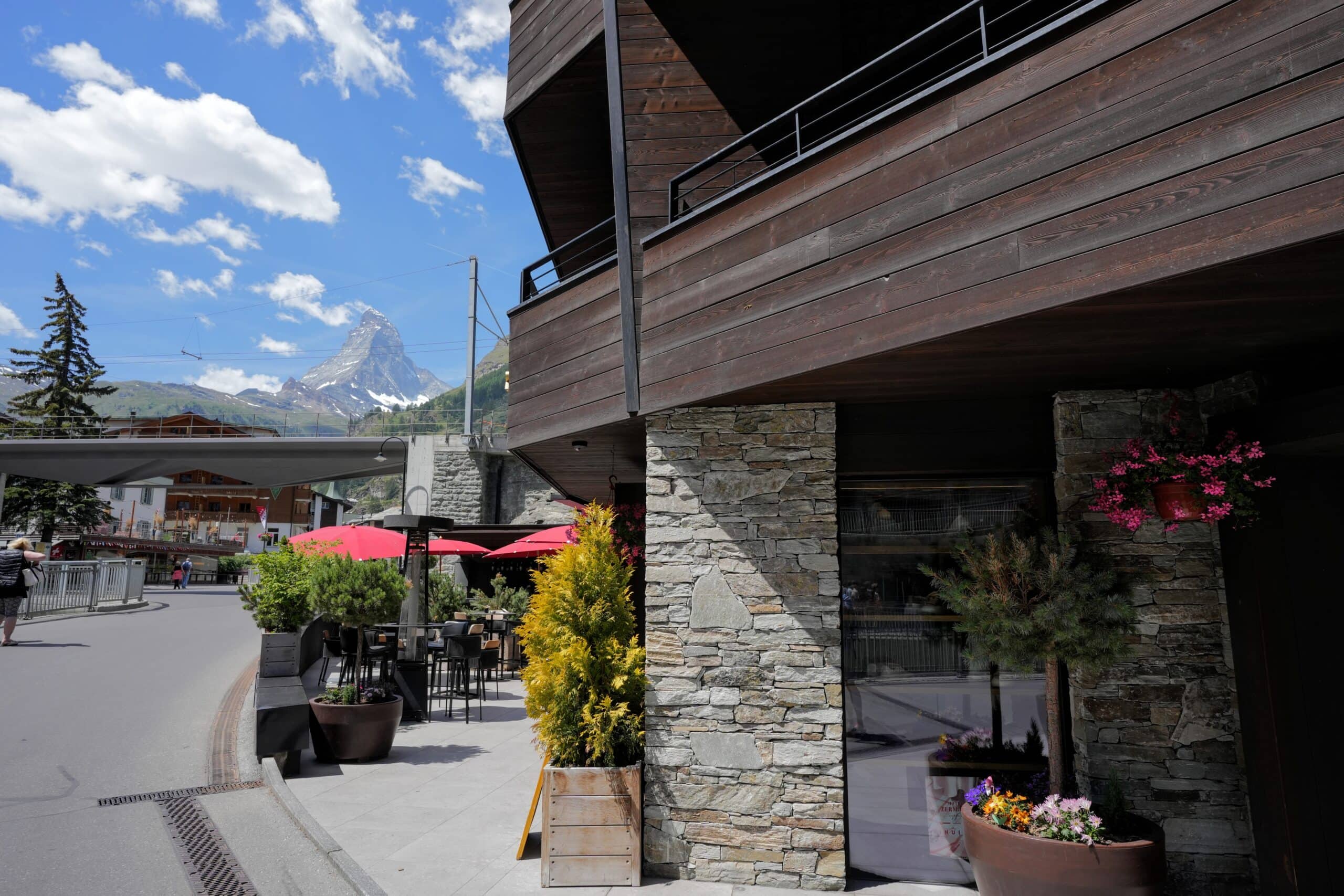
We stayed at Hotel ZERMAMA and we are already thinking about our next visit. The rooms are modern and spacious, the beds are incredibly comfortable, and the hotel has a fun alpine vibe but still feels very Swiss. Breakfast was included with our stay, and the location was perfect, just a few minutes’ walk from both the train station and the main street.
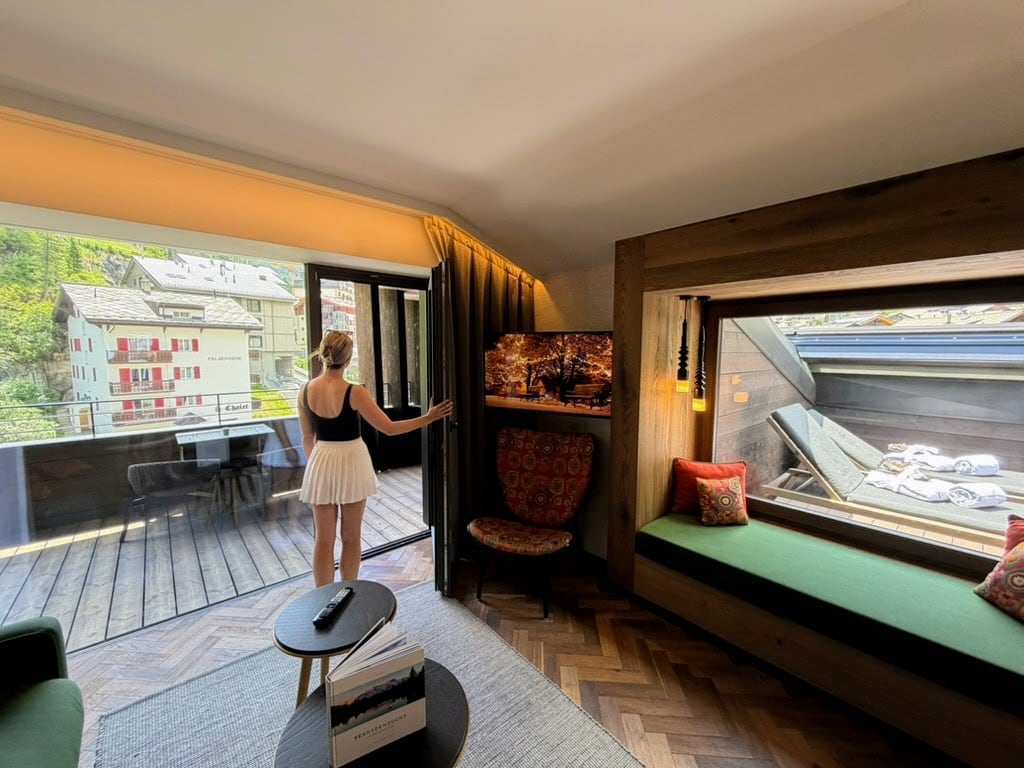
If your budget allows, we think it’s one of the best places to stay in Zermatt.
Our Time At Zermama Hotel
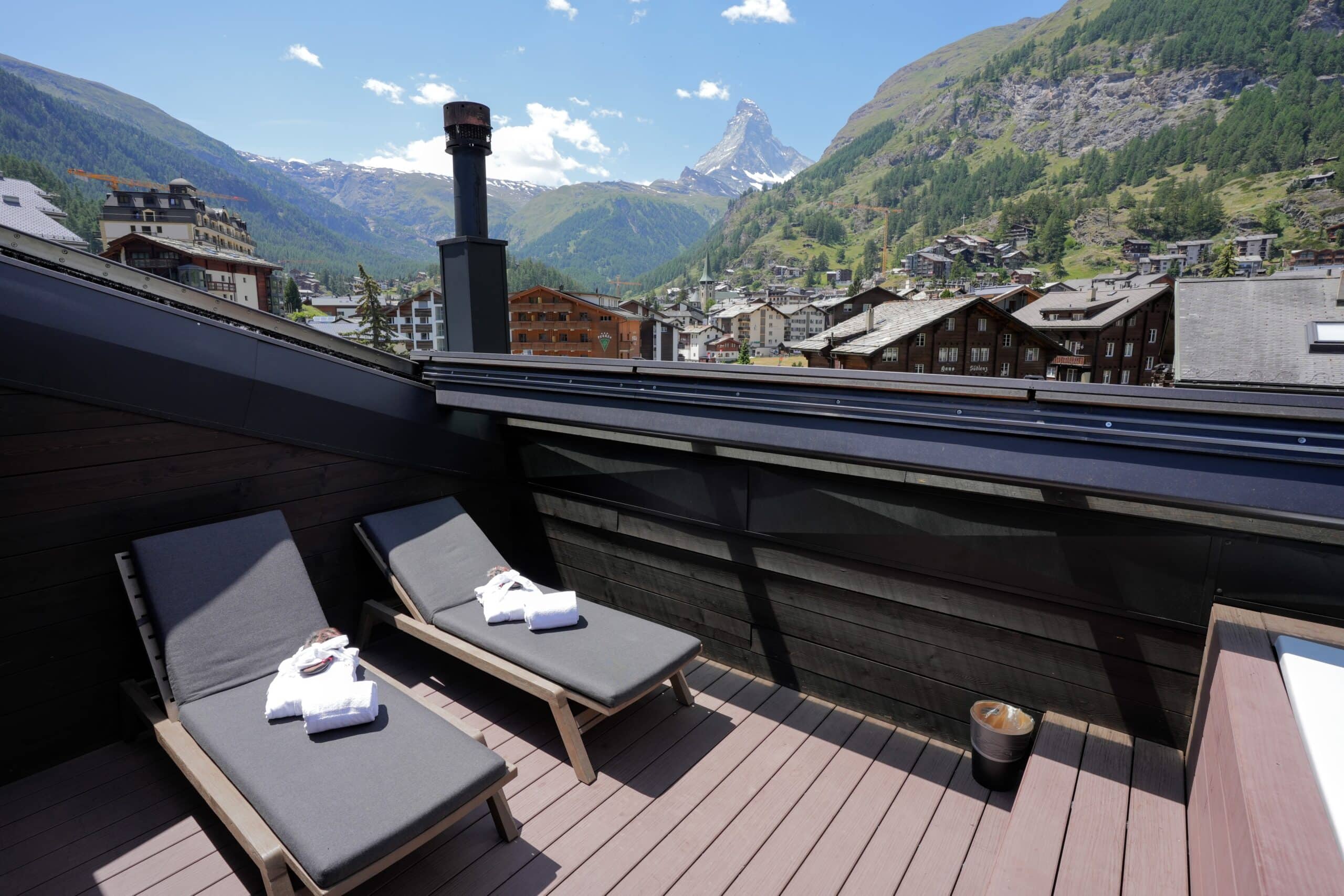
If you’re looking to splurge on one thing in Zermatt, make it your hotel. We stayed in the Pool & Spa Suite, and it completely lived up to the hype. This room was Incredible!
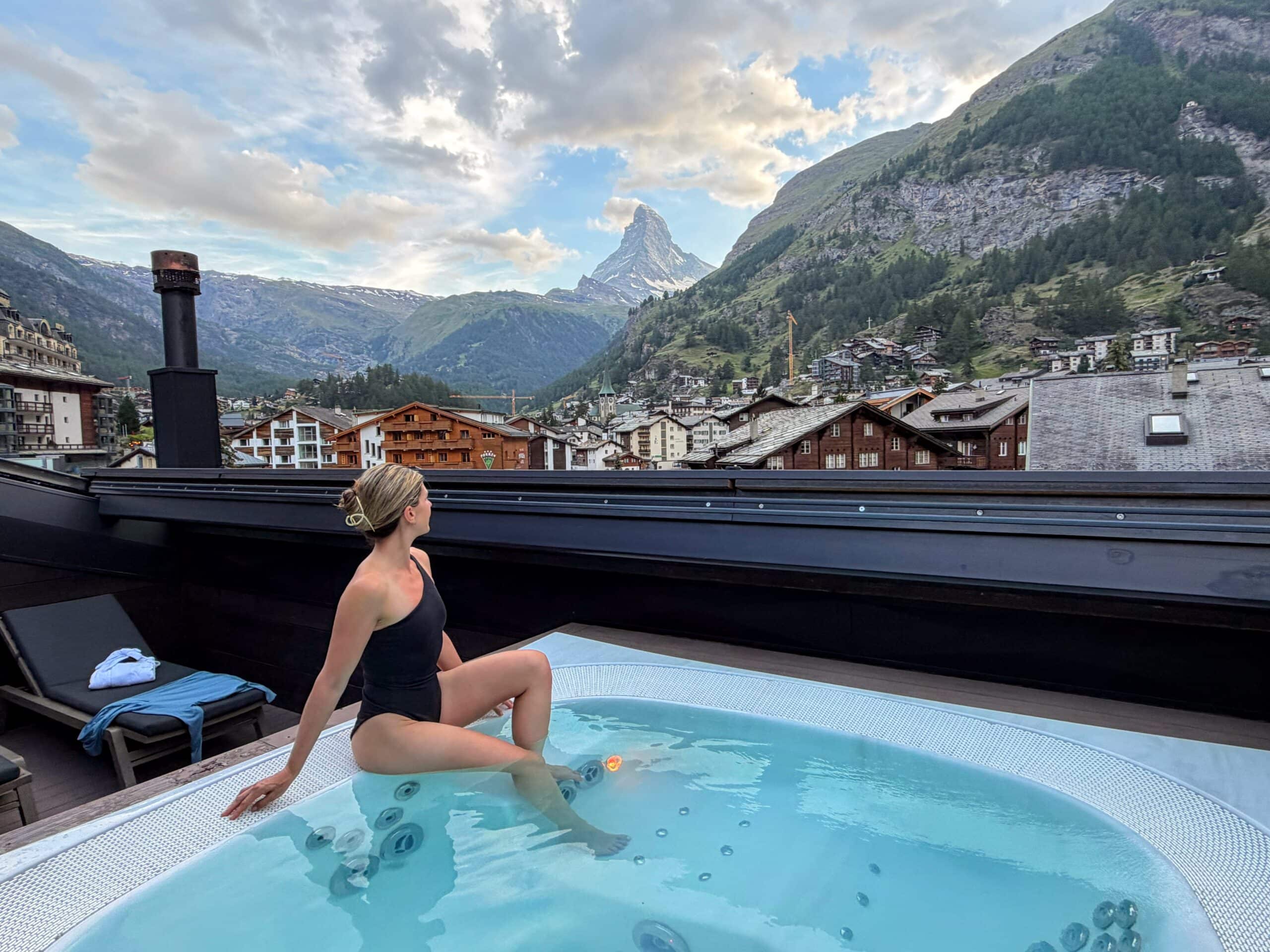
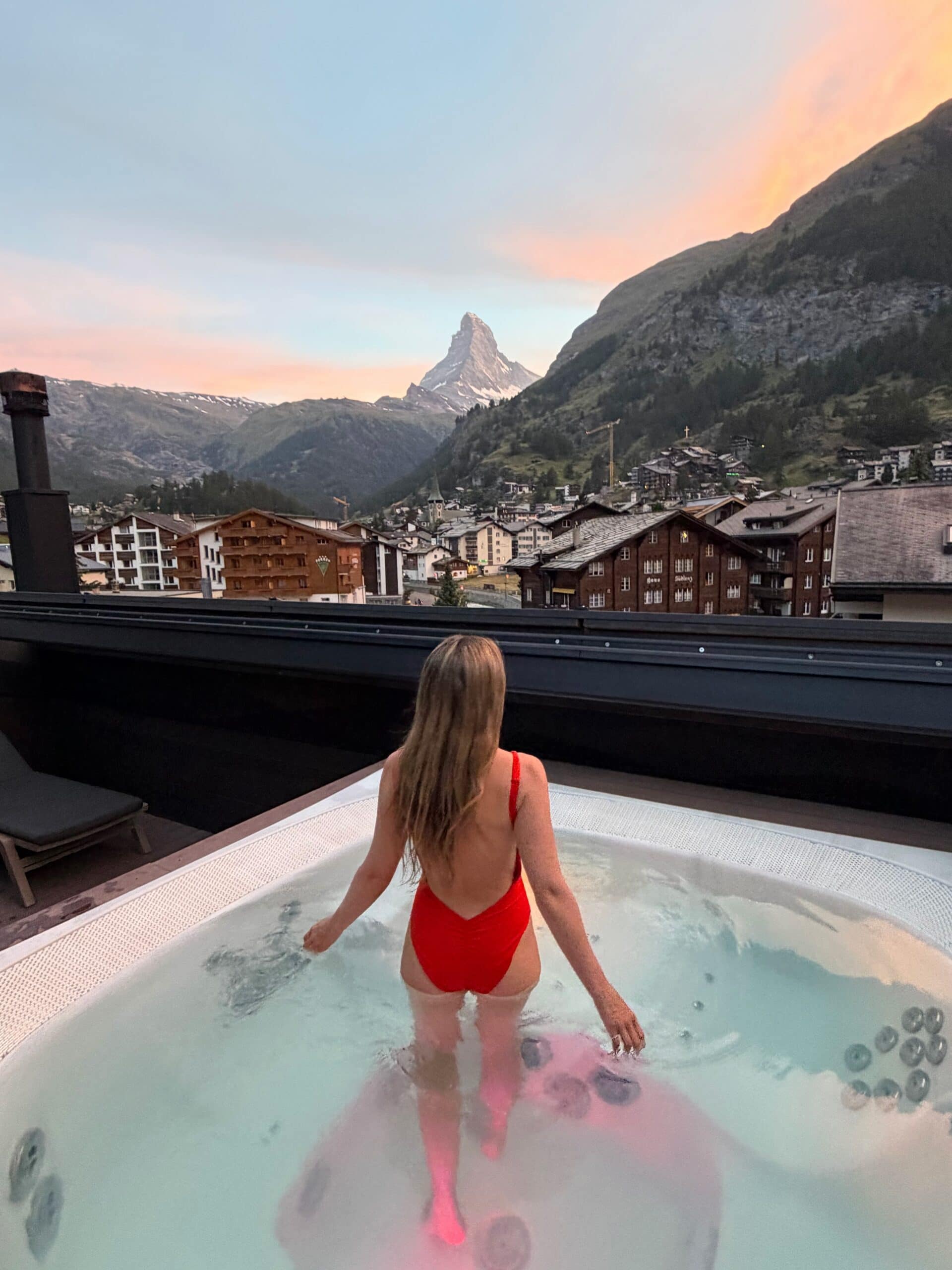
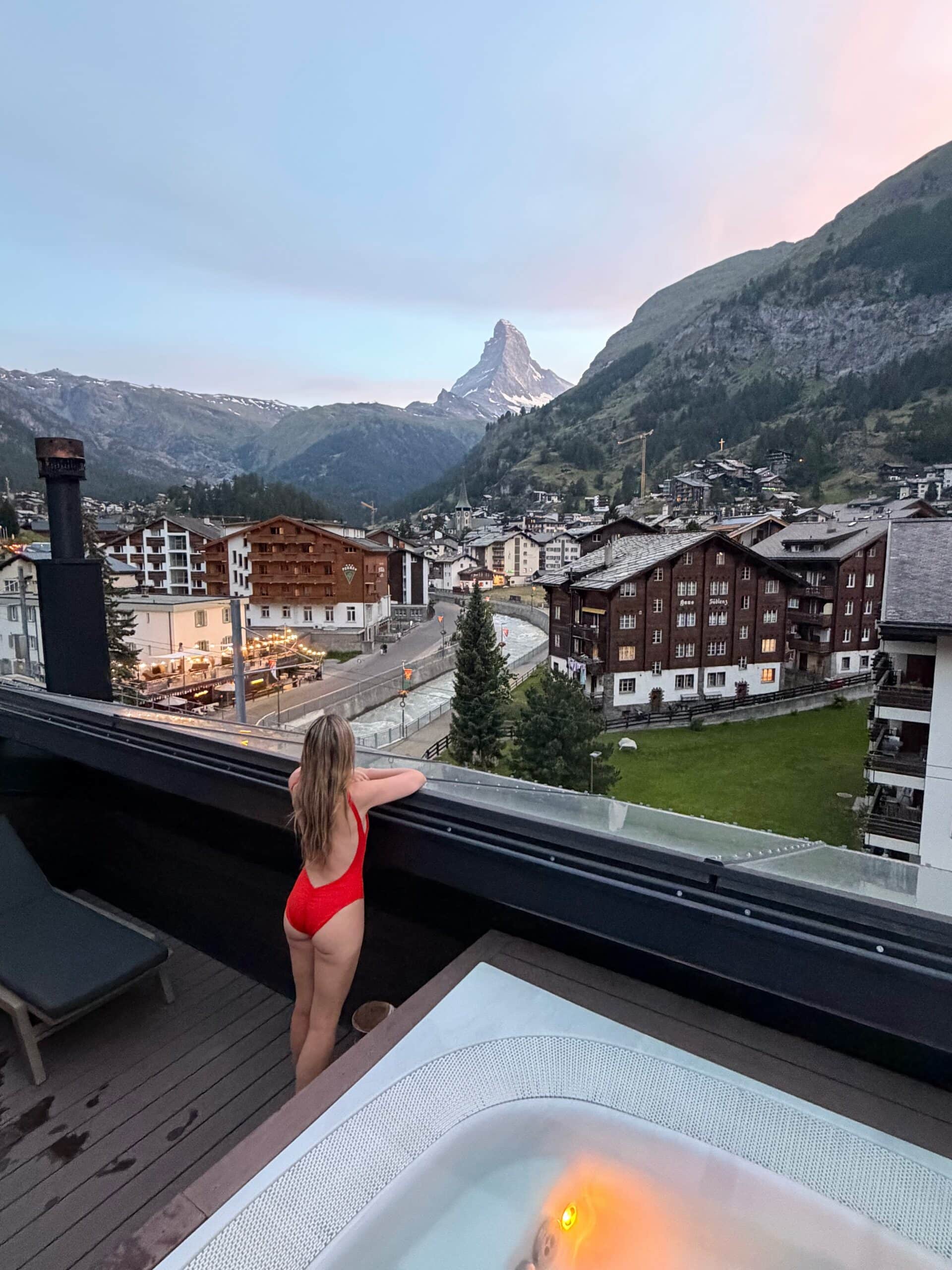
Our suite had a private rooftop terrace with a retractable roof, and a hot tub with Matterhorn views!
Hot tub with the Matterhorn in the background
Fondue on the balcony
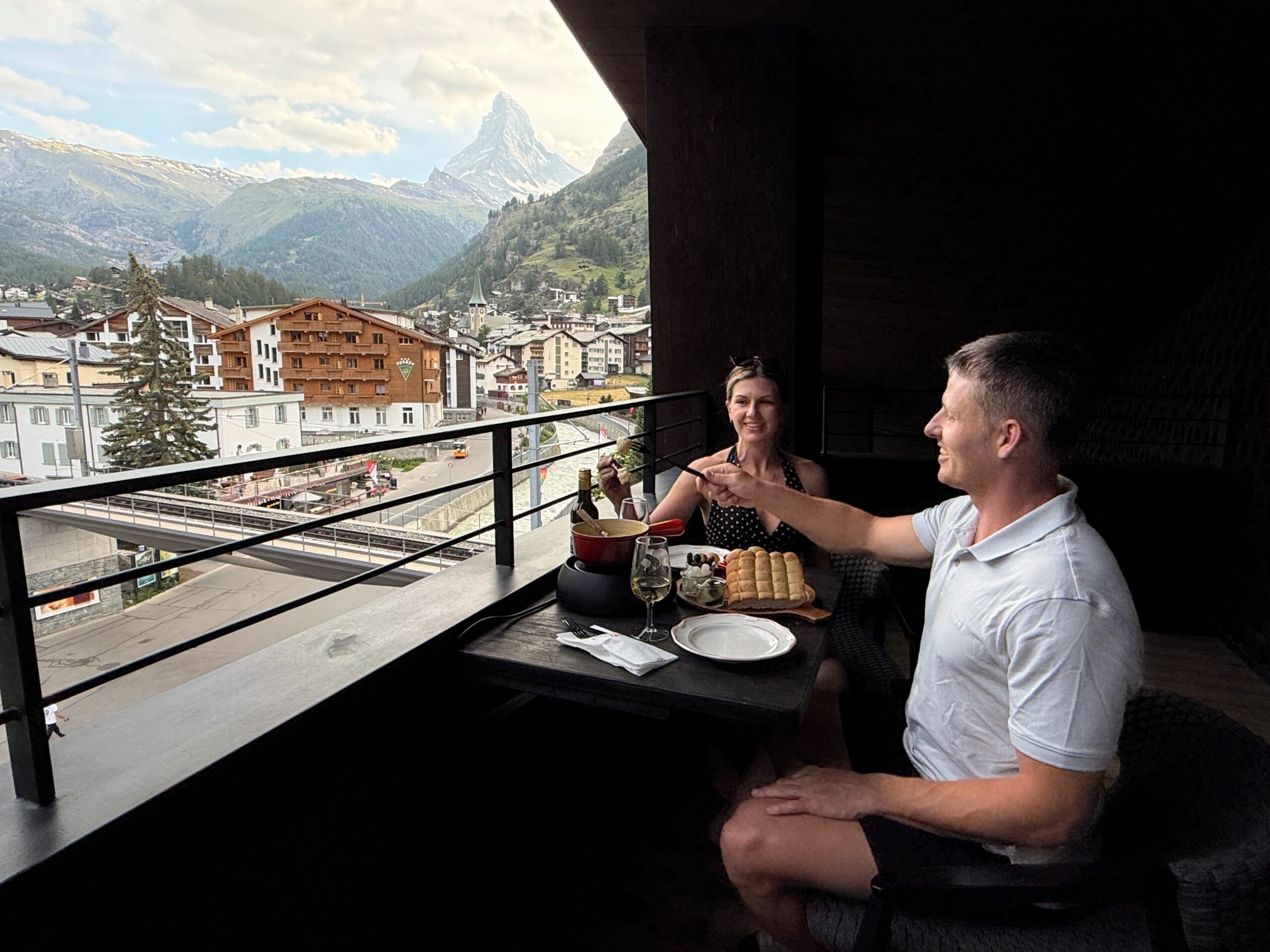
One of our favourite memories was ordering Swiss fondue to our room and eating it on the balcony while the sun set behind the Matterhorn.
Bedroom/living area
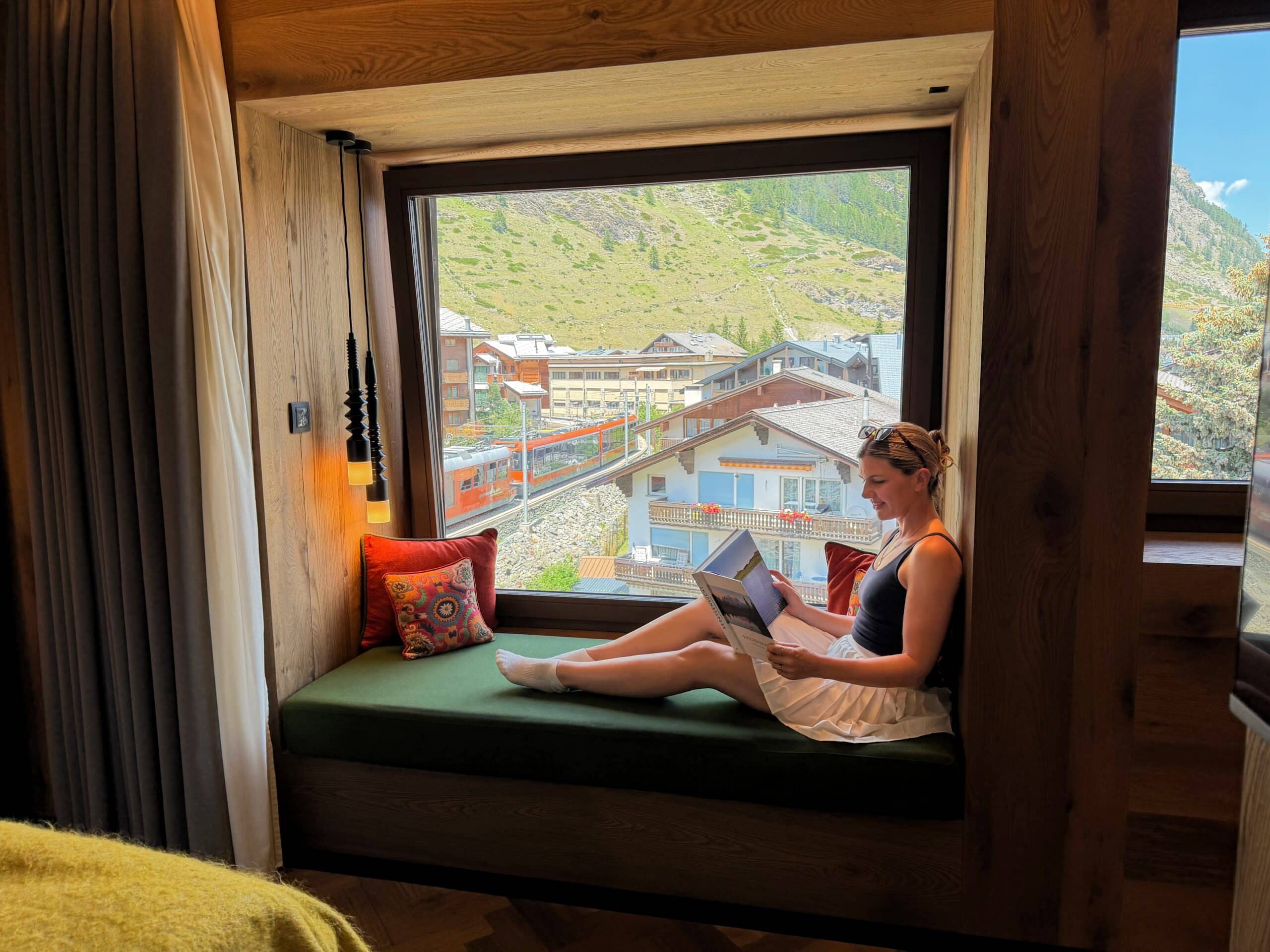
The room itself was modern, spacious, and incredibly comfortable, making it the perfect place to unwind after a day of hiking or biking. The private in-room sauna didn’t hurt either.
Healthy Delicious Breakfast
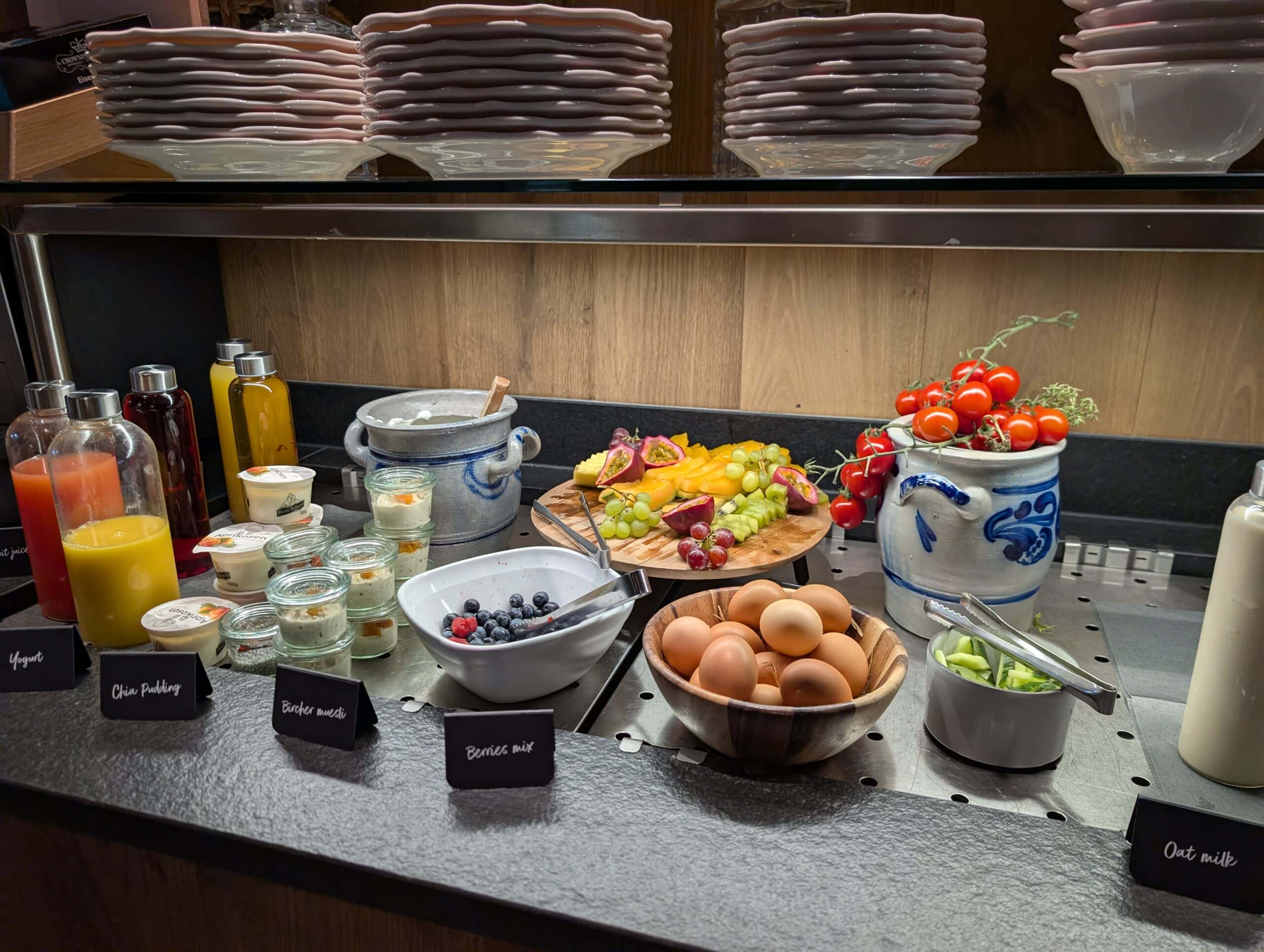

The Swiss like the rest of Europe, love their deli meat and cheese for breakfast so we were super excited to see all these fresh fruits and juices!
It’s also only a few minutes from the train station, so you can walk everywhere in town without dragging your luggage across Zermatt. If you don’t feel like walking they have a little electric shuttle they are happy to pick you up and drop you off in.
It is a very popular hotel, you can check their availability here
Day 1: Explore the Heart of Zermatt
Arrive in Zermatt
- Driving to Täsch
- Train into Zermatt
- First impressions
Check in at Zermama
Call or email ahead for pickup if you have heavy luggage, If not it’s an easy 10 minute walk.
Explore Zermatt Old Town
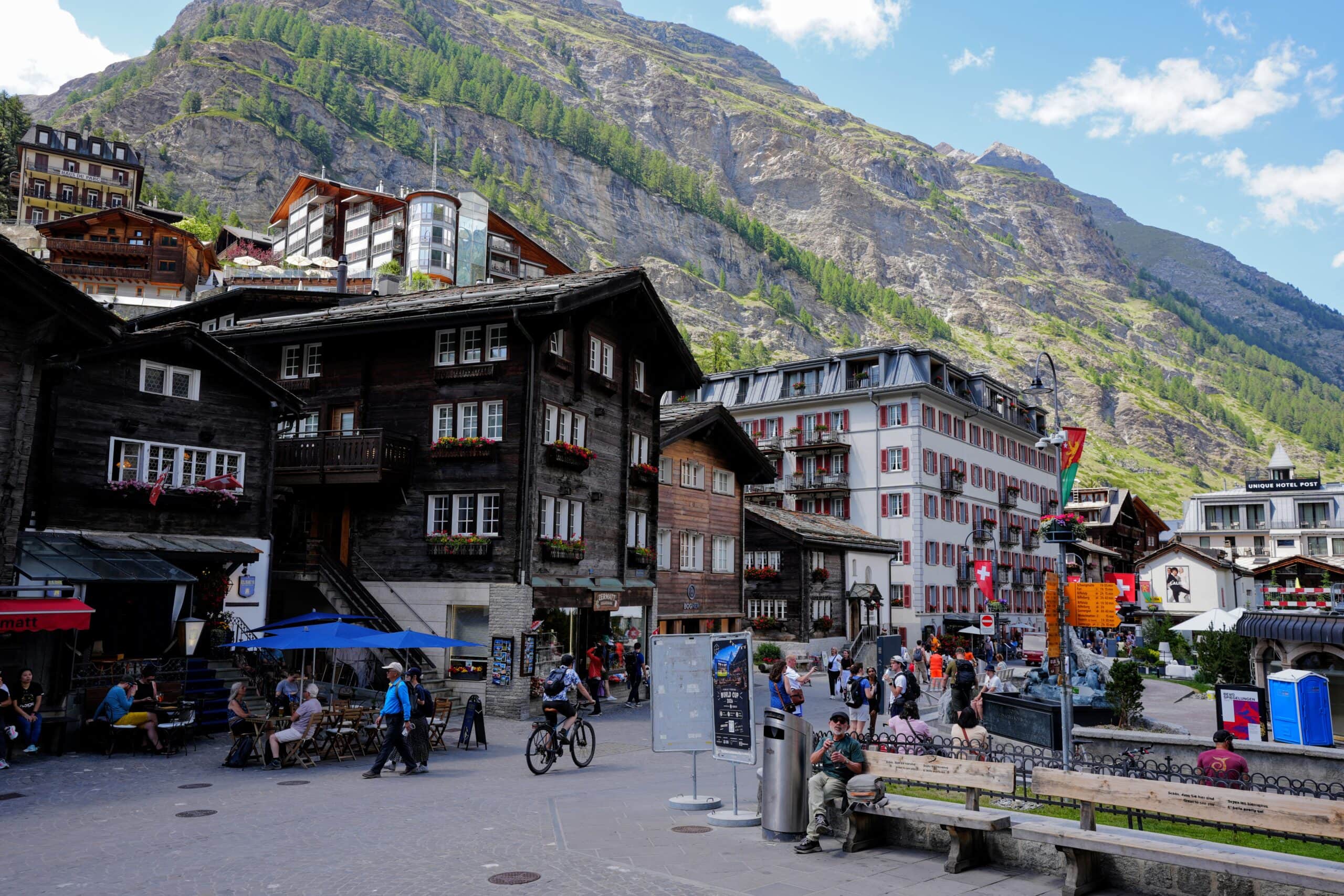
Walk the cute old town streets, shop and explore. When you get tired grab a coffee or drink in one of the many streetside cafe.
Enjoying some champagne at Elsies.
Walk Along the Matter Vispa River
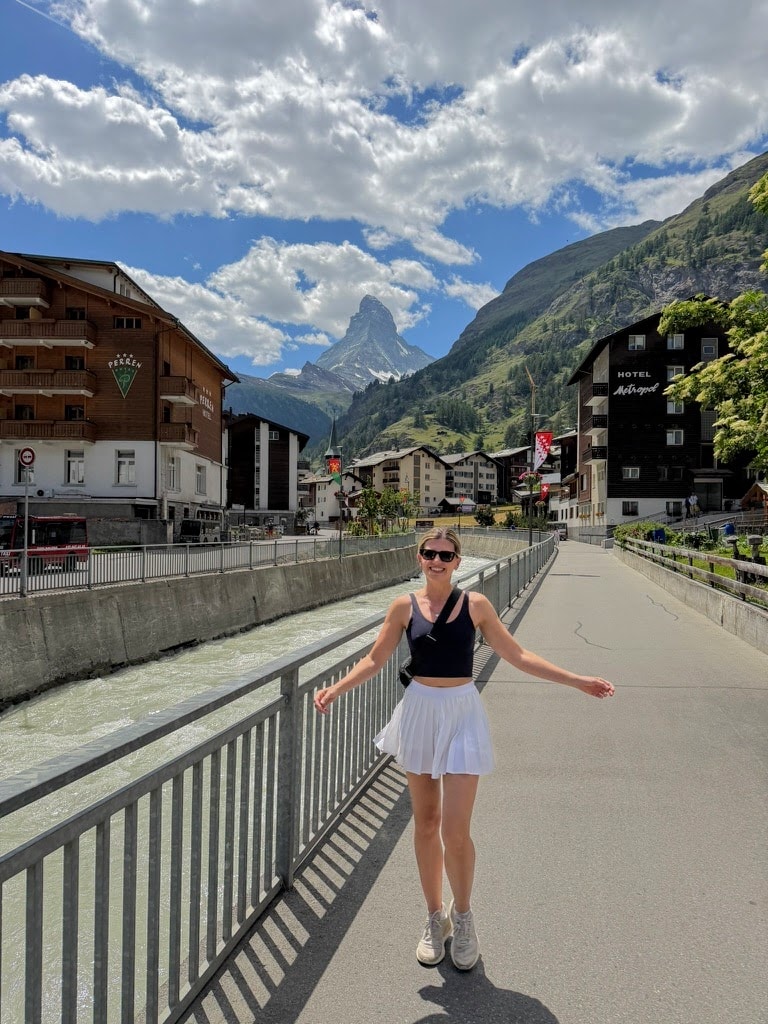
The Vispa River divides Zermatt town and is a great scenic area to walk around. If you keep following the river you end up at Zermatt Gorge.
Zermatt Gorner Gorge
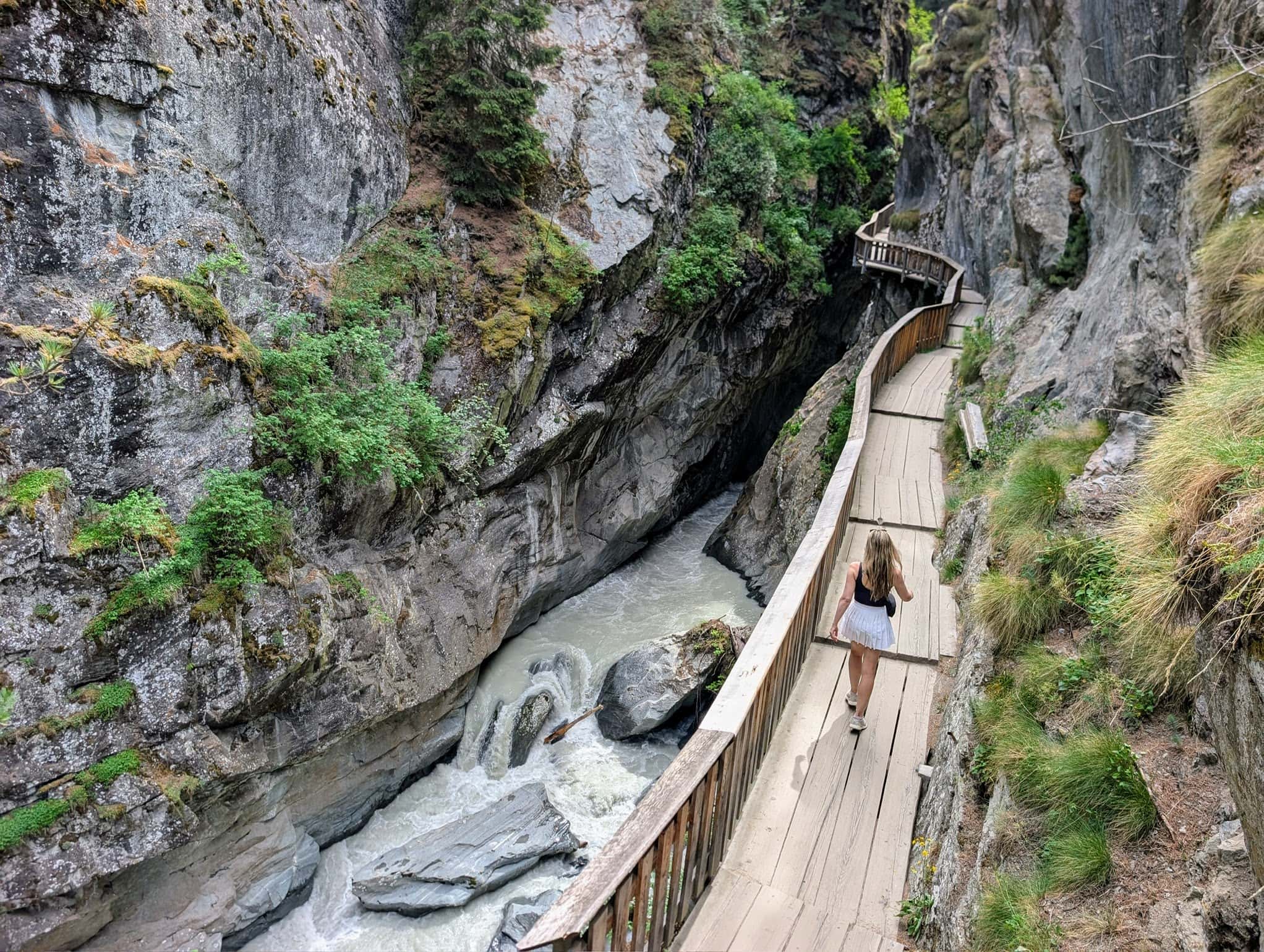
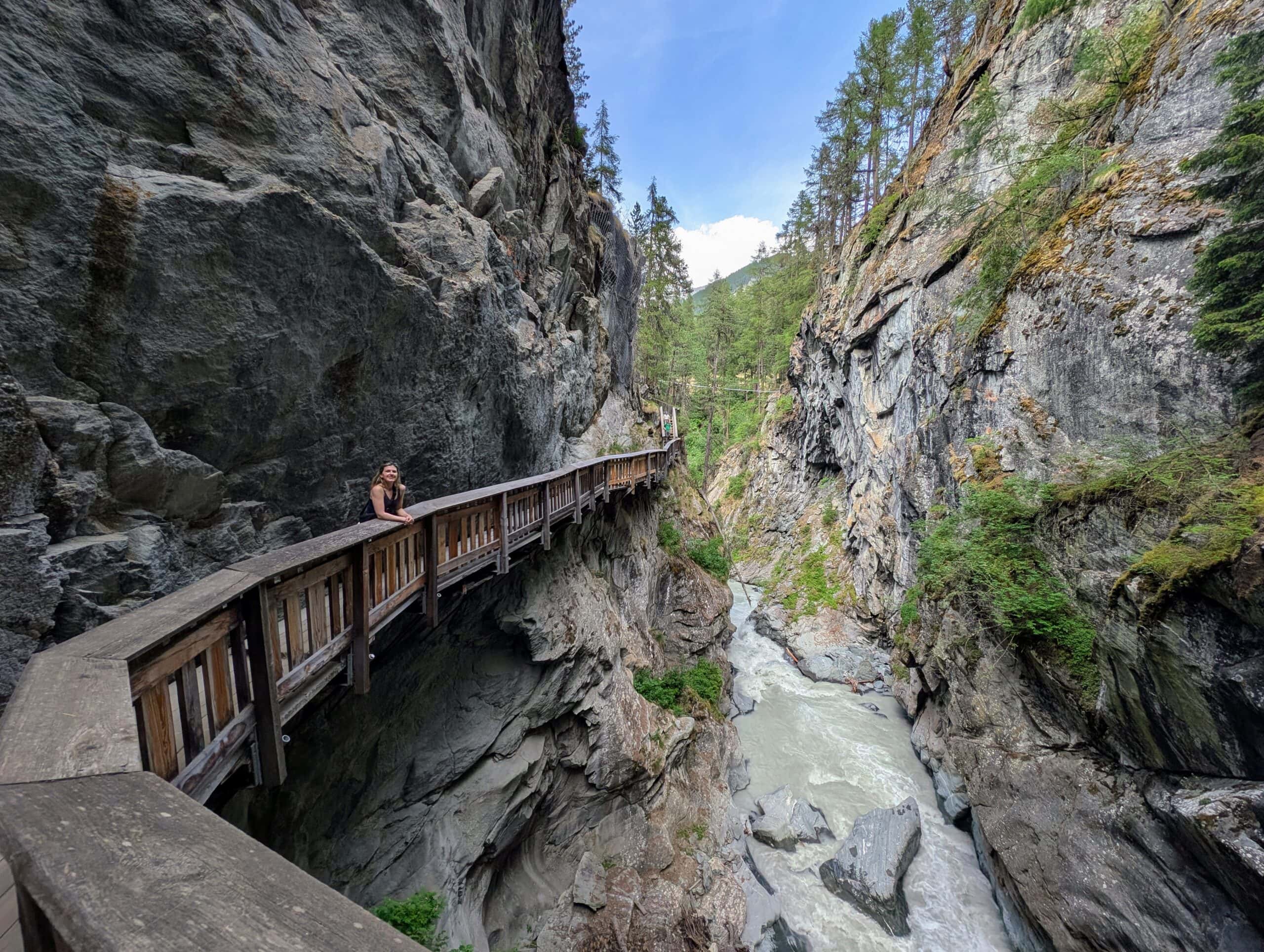
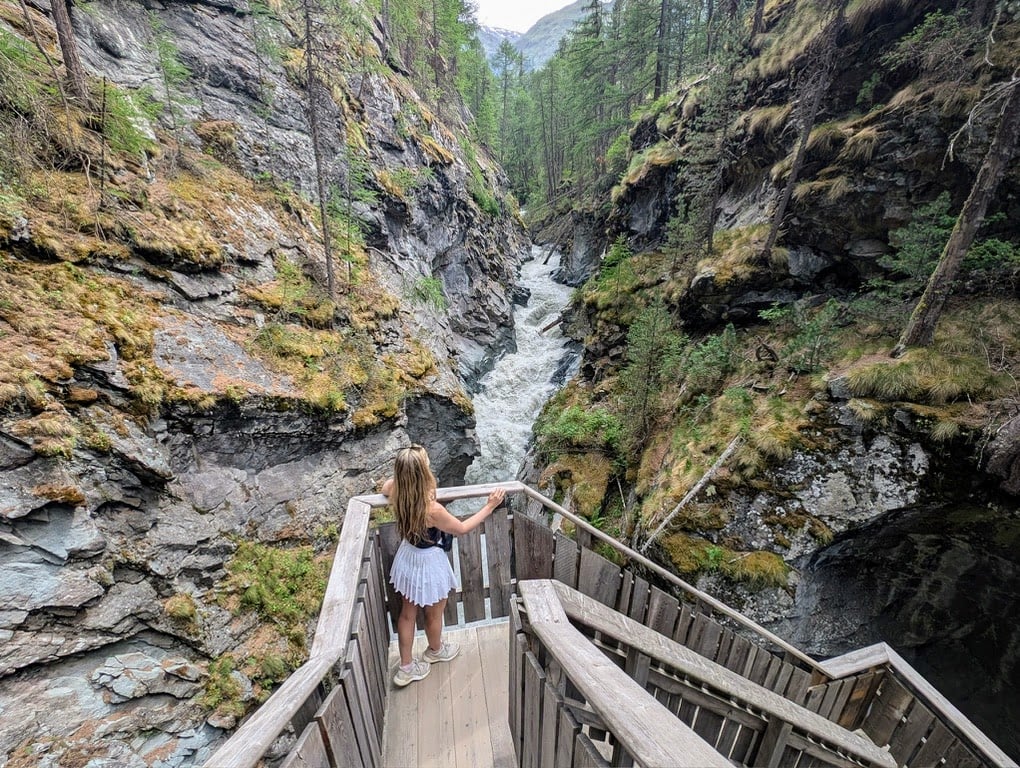
About a 15 minute walk north of town there is a cool gorge and boardwalk you can explore for 5 CHF if you feel like it. When we visited in July it was a bit of a heat wave and the cool gorge was a nice escape.
Dinner in Zermatt
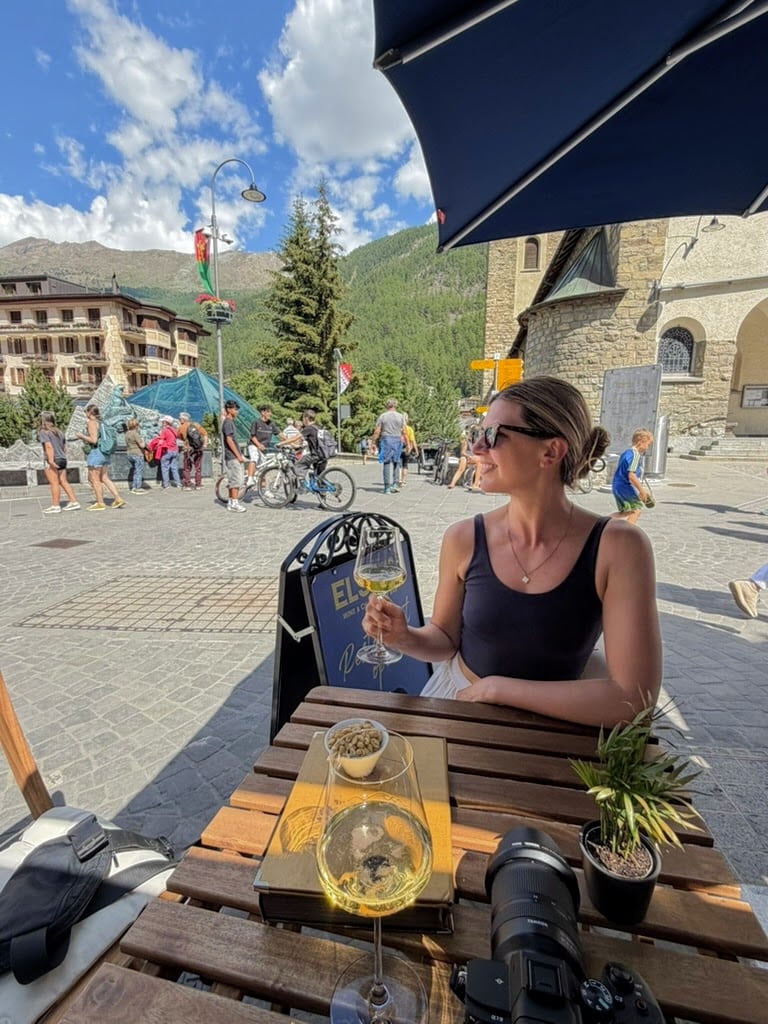
There are loads of great places to eat in Zermatt. After exploring and arriving we opted to grab champagne and a snack at Elsies.
Sunset Photography Locations
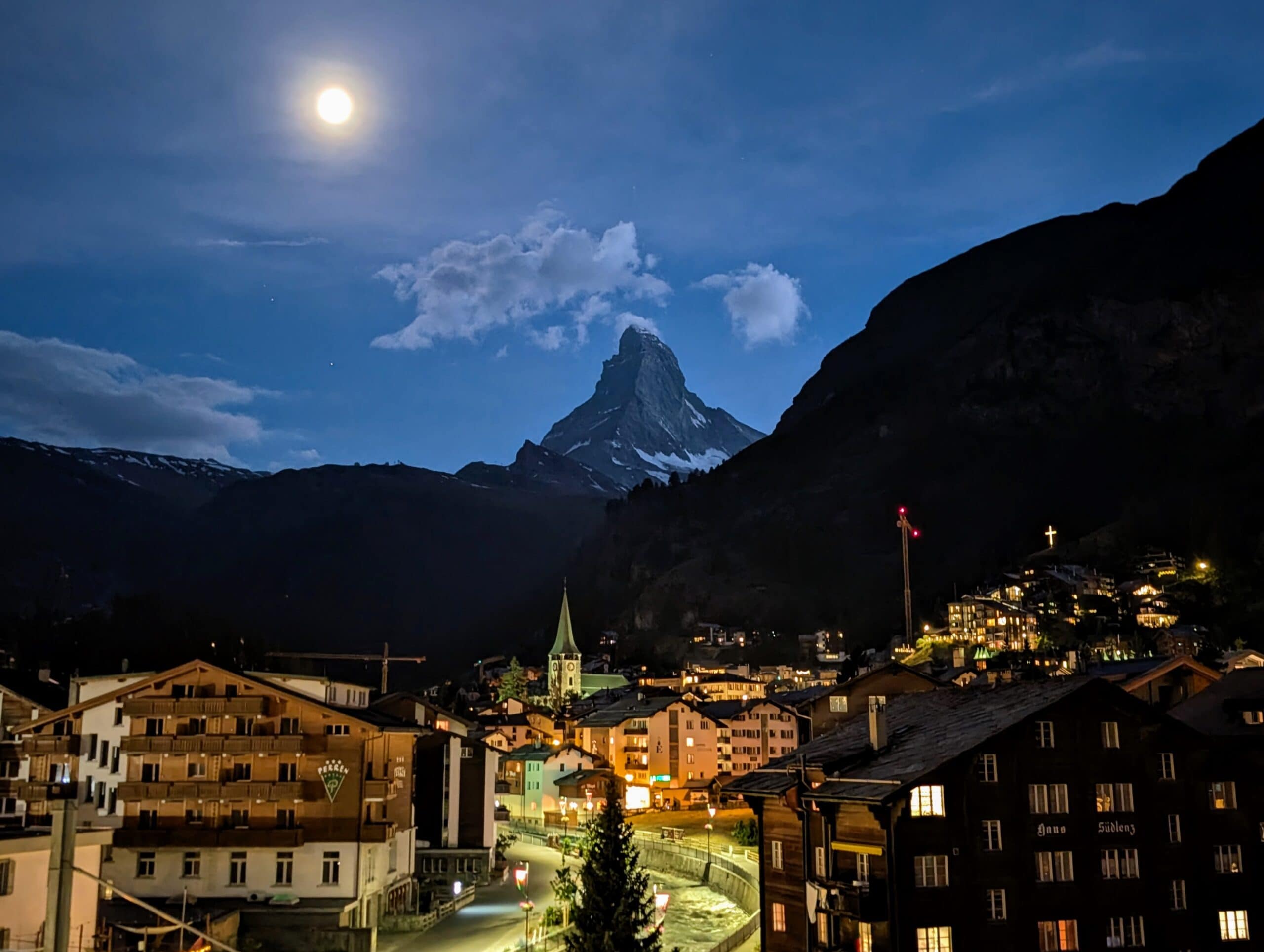
Hike up to Murini hill from town to get the iconic view of Zermatt with the Matterhorn behind you. We rented our e-bikes on the first day so we were able to zip up here in no time.
Day 2: Experience the Best Views of the Matterhorn
Start Your Day Early
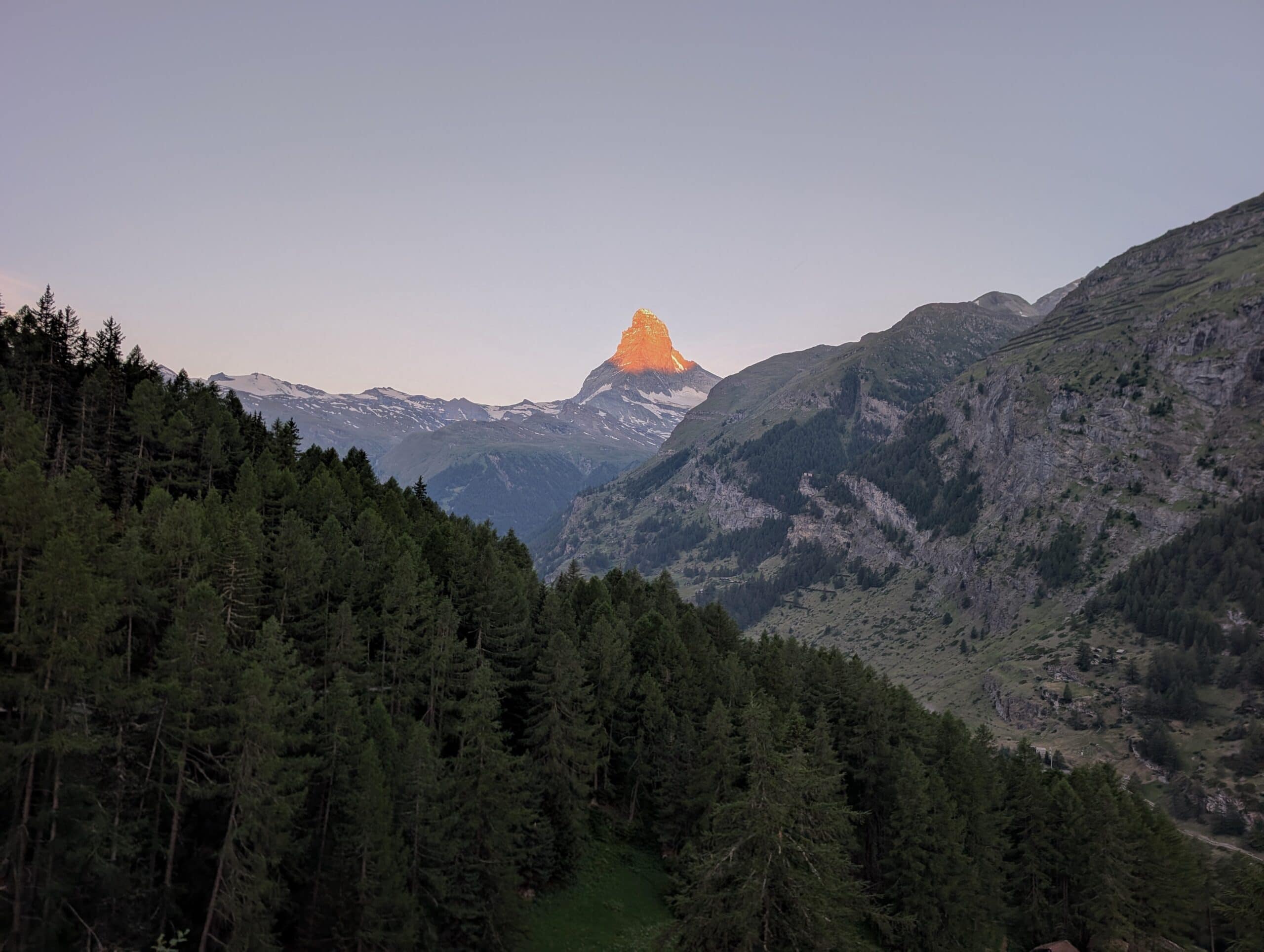
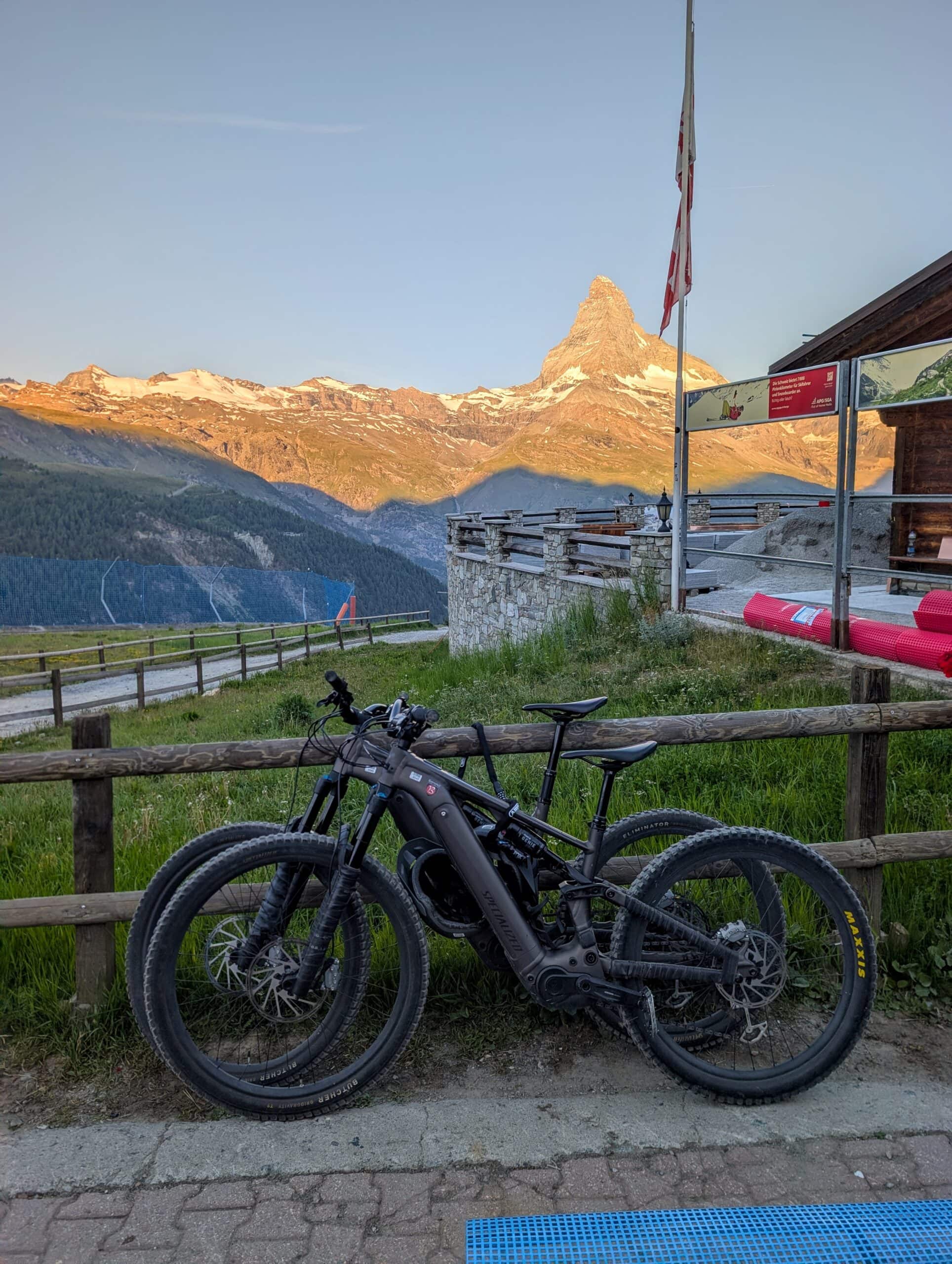
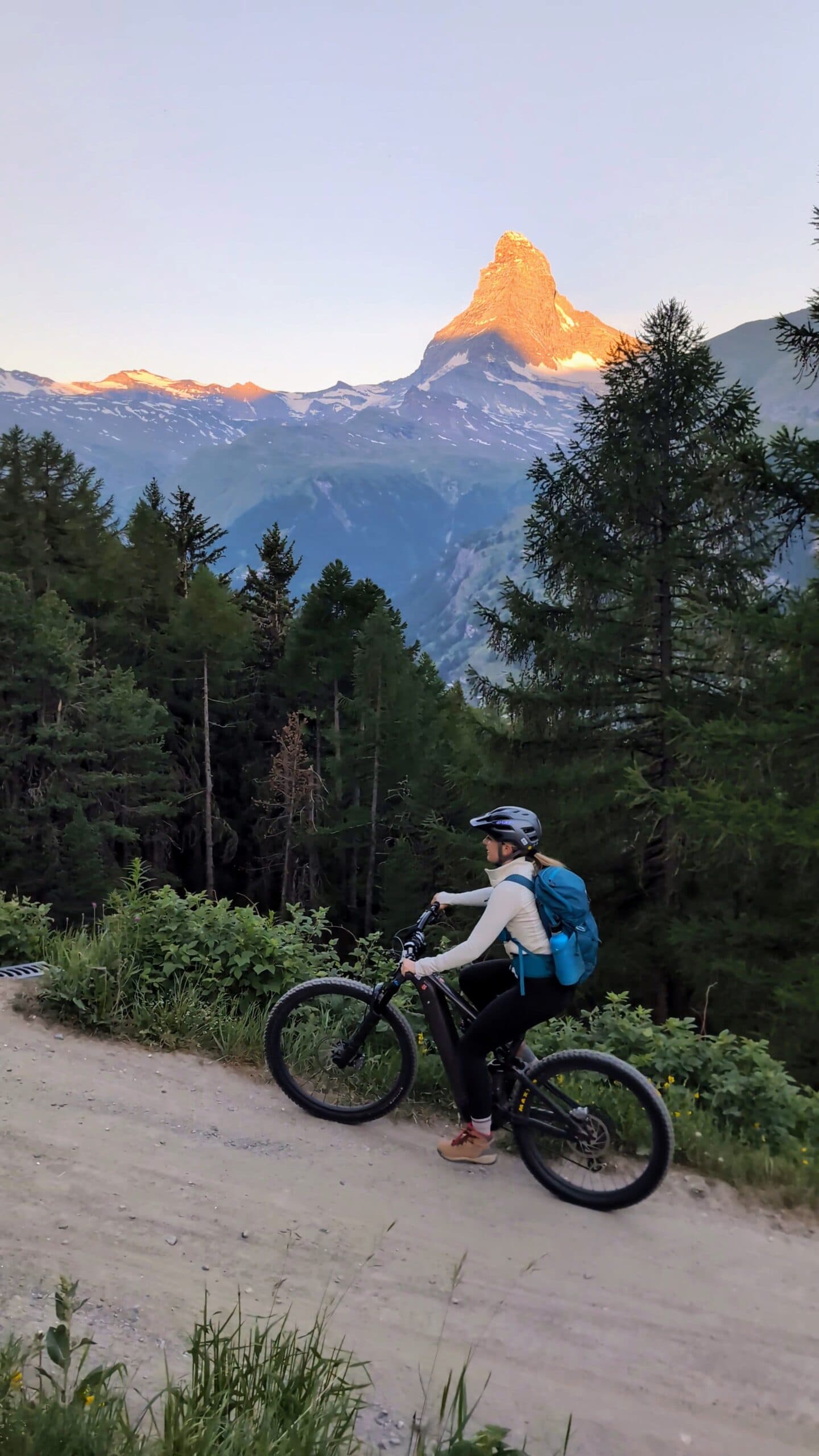
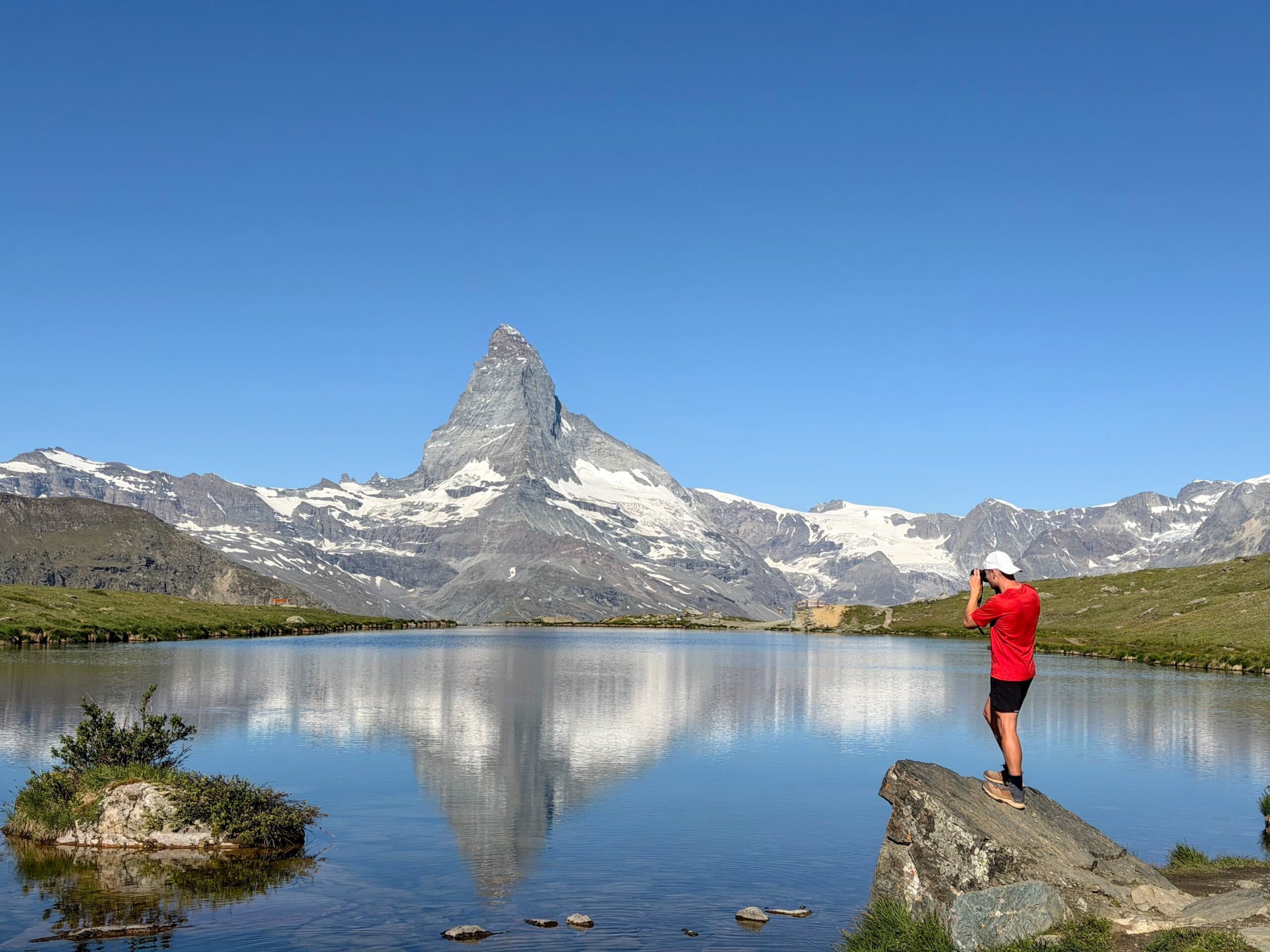
If you want to see the famous Matterhorn reflection at Stellisee, you’ll need to start early. Most people take the Blauherd gondola, but the first lift doesn’t start running until 8:30 am, meaning you’ll miss sunrise.
Instead, we asked our hotel to prepare a boxed breakfast the night before, woke up before dawn, and rented e-bikes to ride up the mountain. It was one of the best decisions we made. We reached Stellisee before anyone else, watched the late sunrise over the Matterhorn, and had the lake completely to ourselves for over an hour.
Sunrise at Stellisee
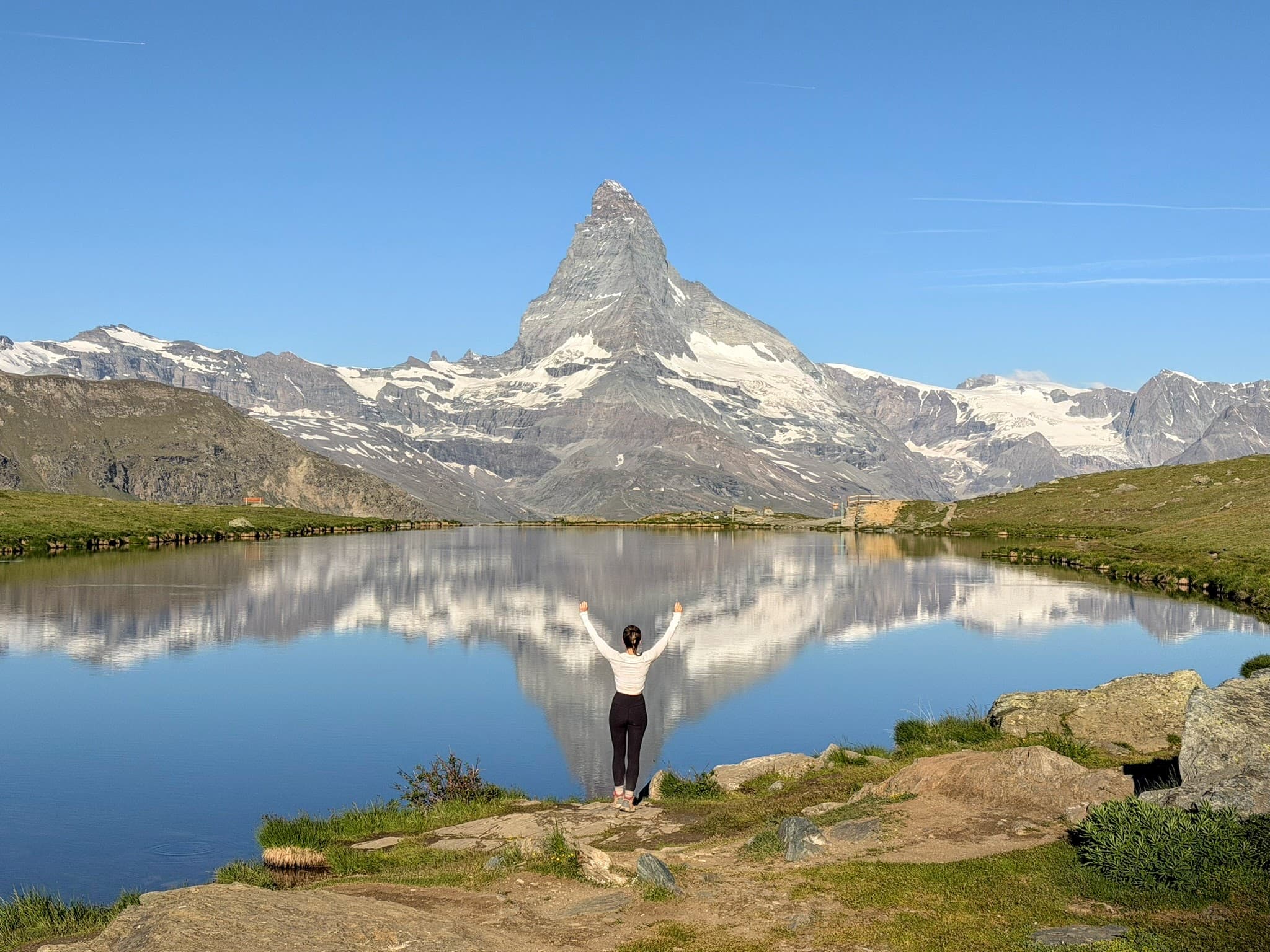
There are three ways to get to Stellisee:
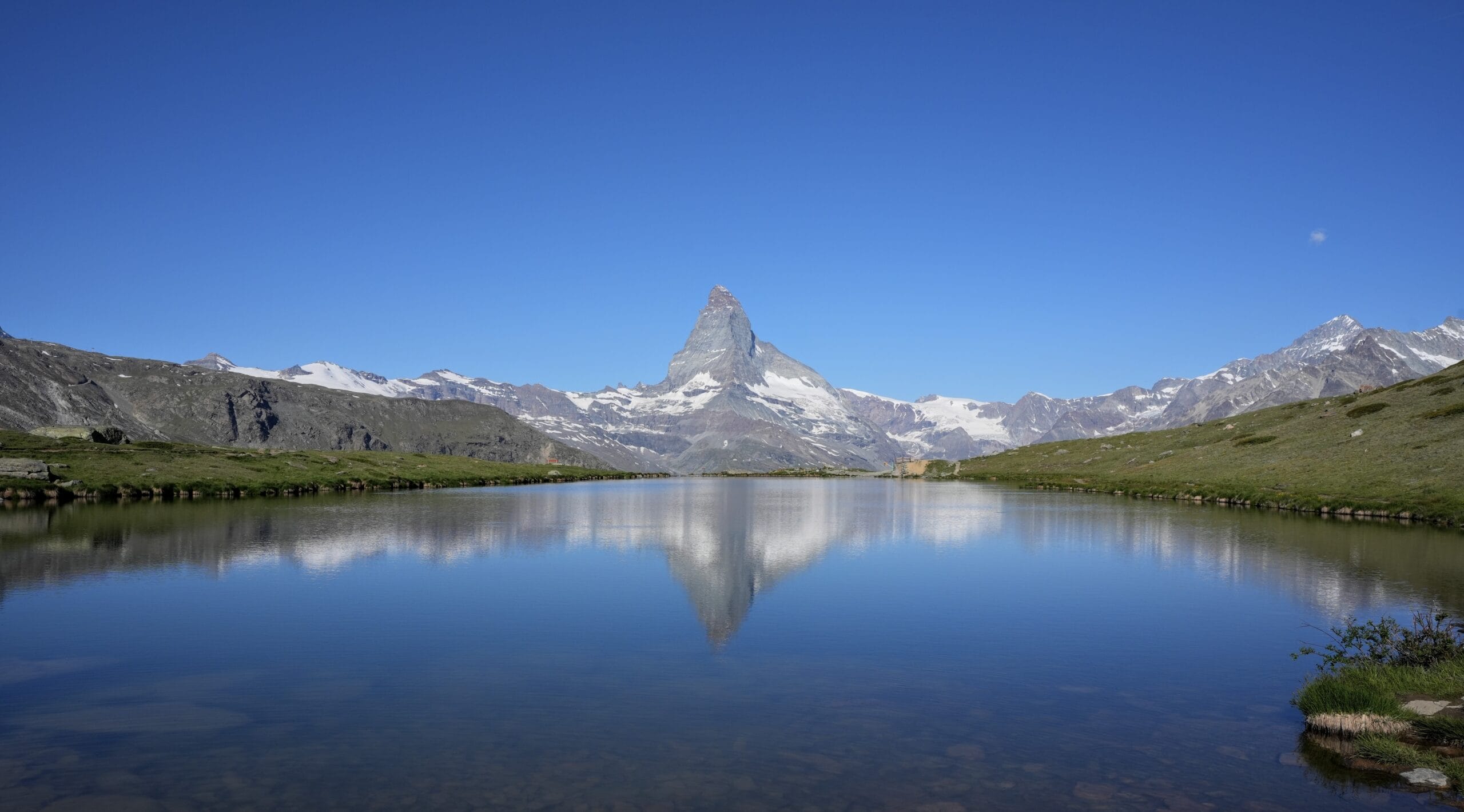
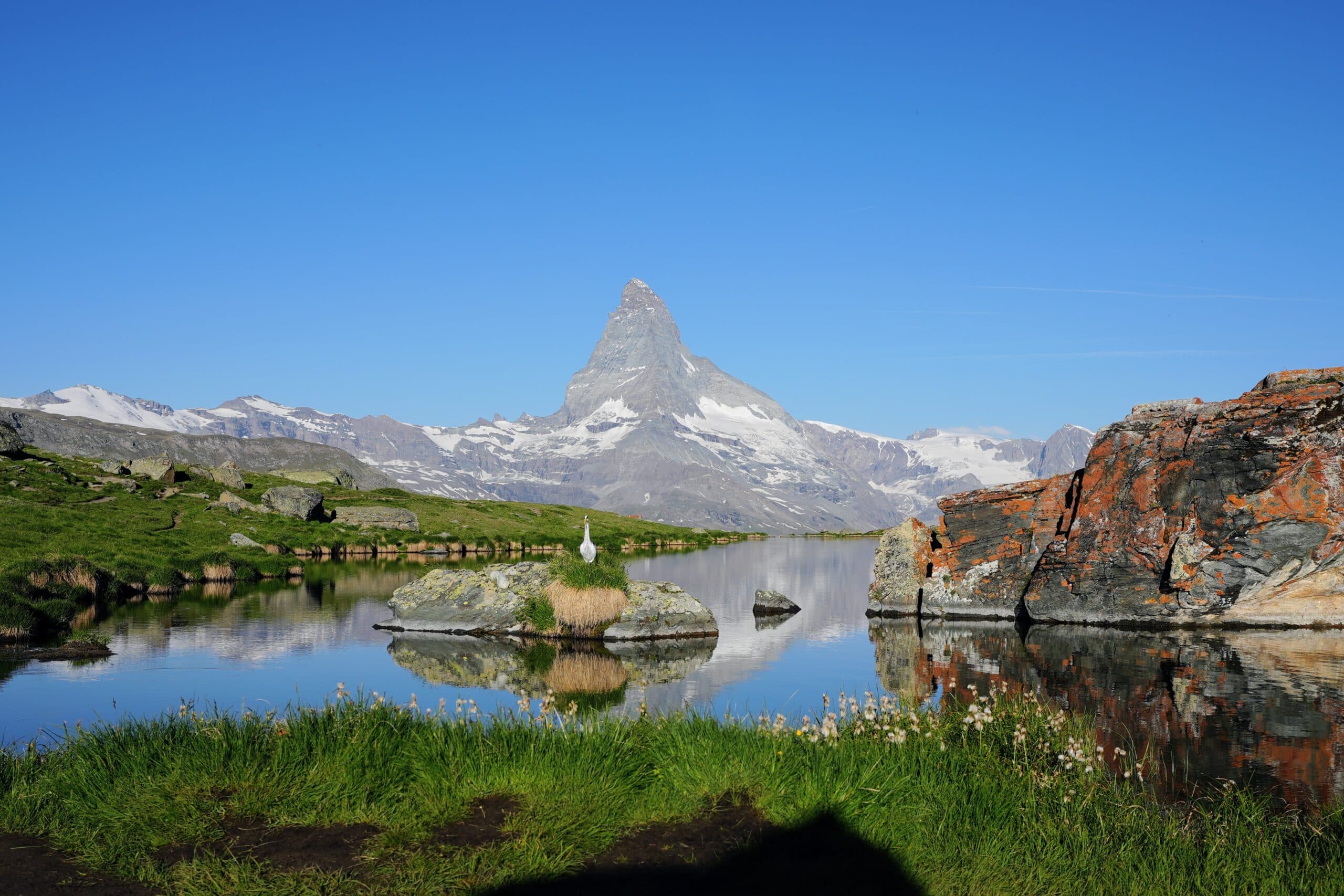
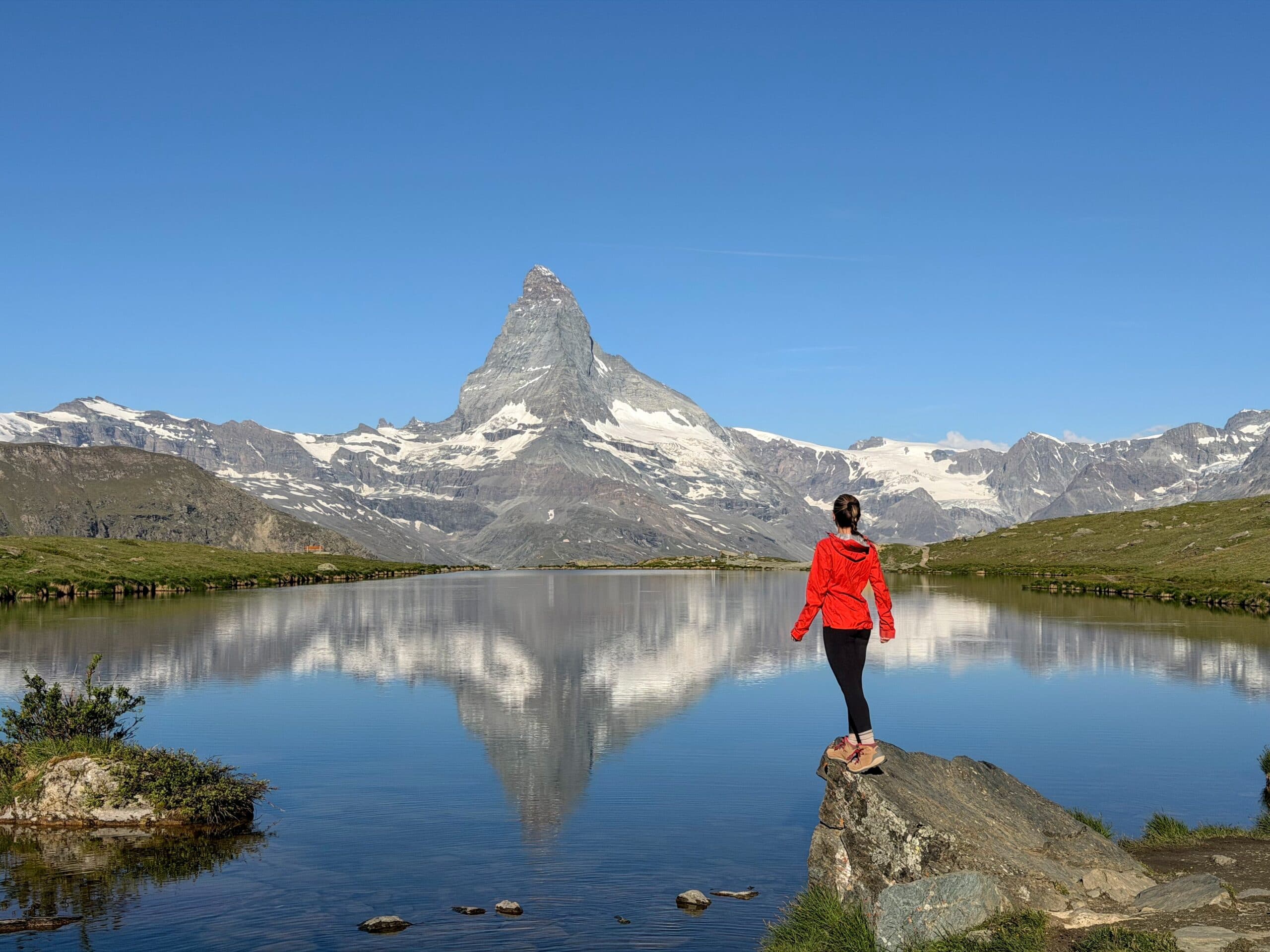
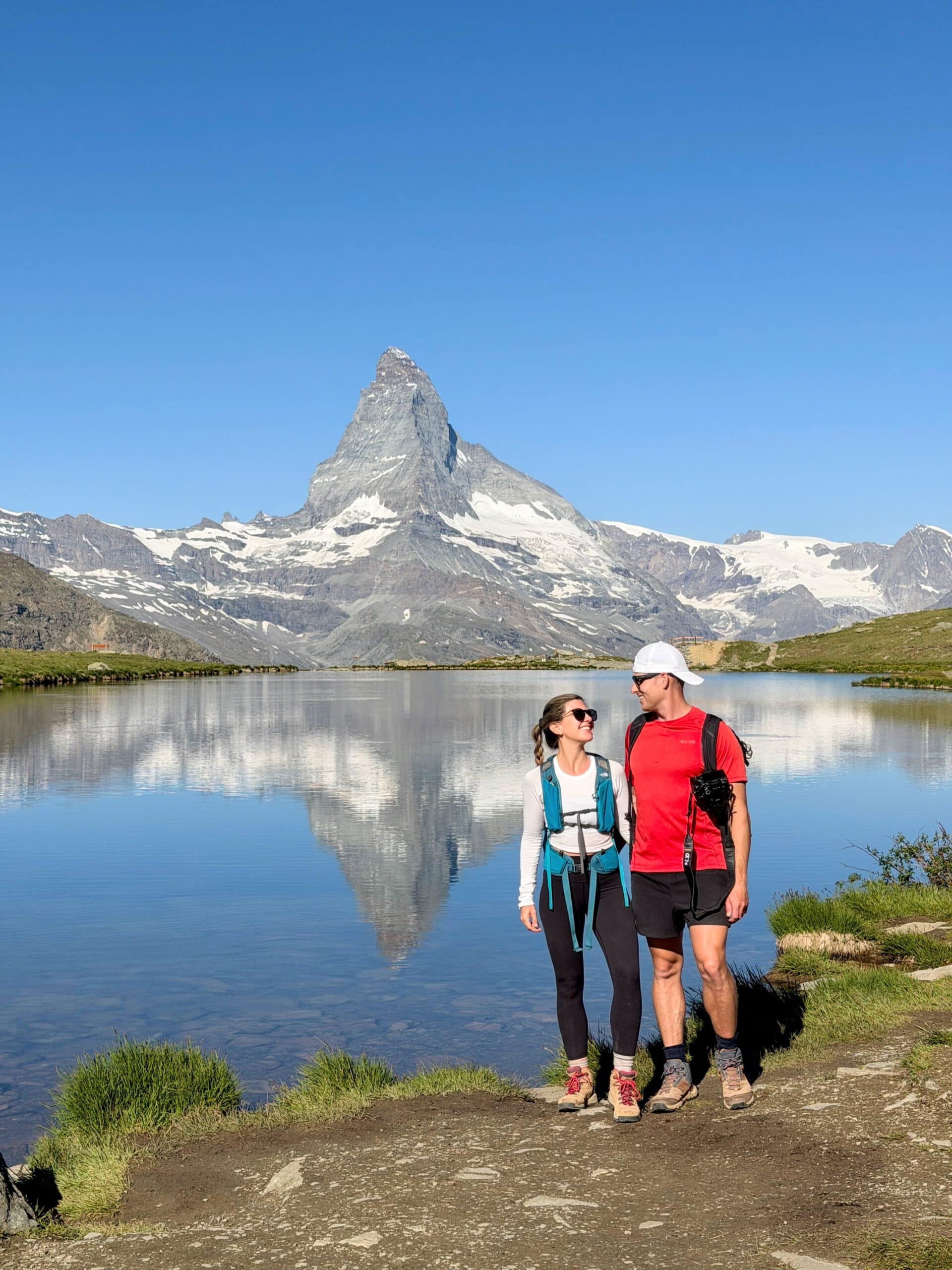
Take the Blauherd gondola, which starts operating at 8:30 am. On select Sundays there is a breakfast and sunrise early chairlift you can book but it wasn’t available when we were there.
Hike – You can walk directly up but it is a long way.
Rent an e-bike, which gives you the freedom to reach the lake for sunrise and beat the crowds, just like we did. If you are comfortable on a bike this was a great option!
Hike the Five Lakes Trail
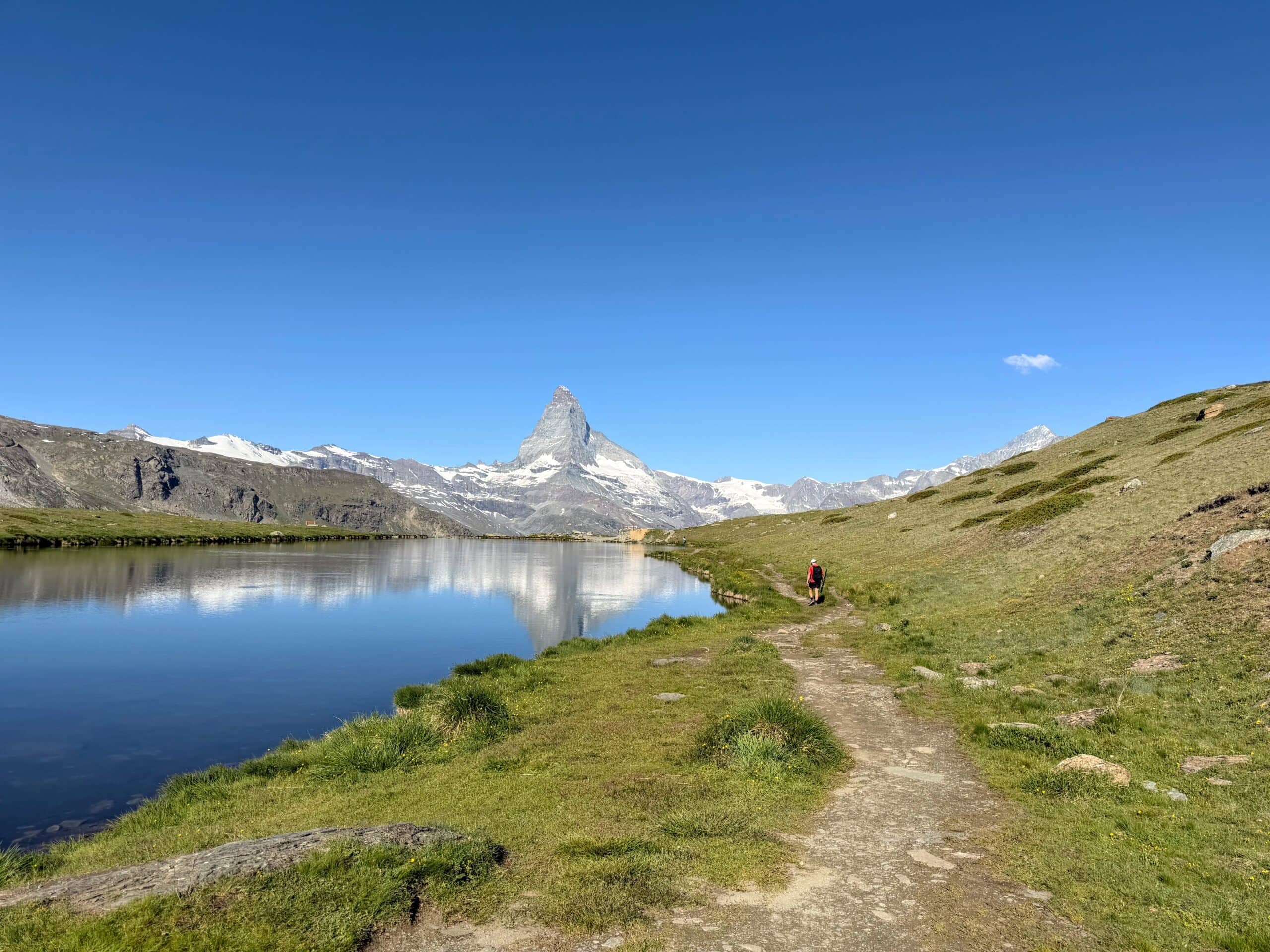
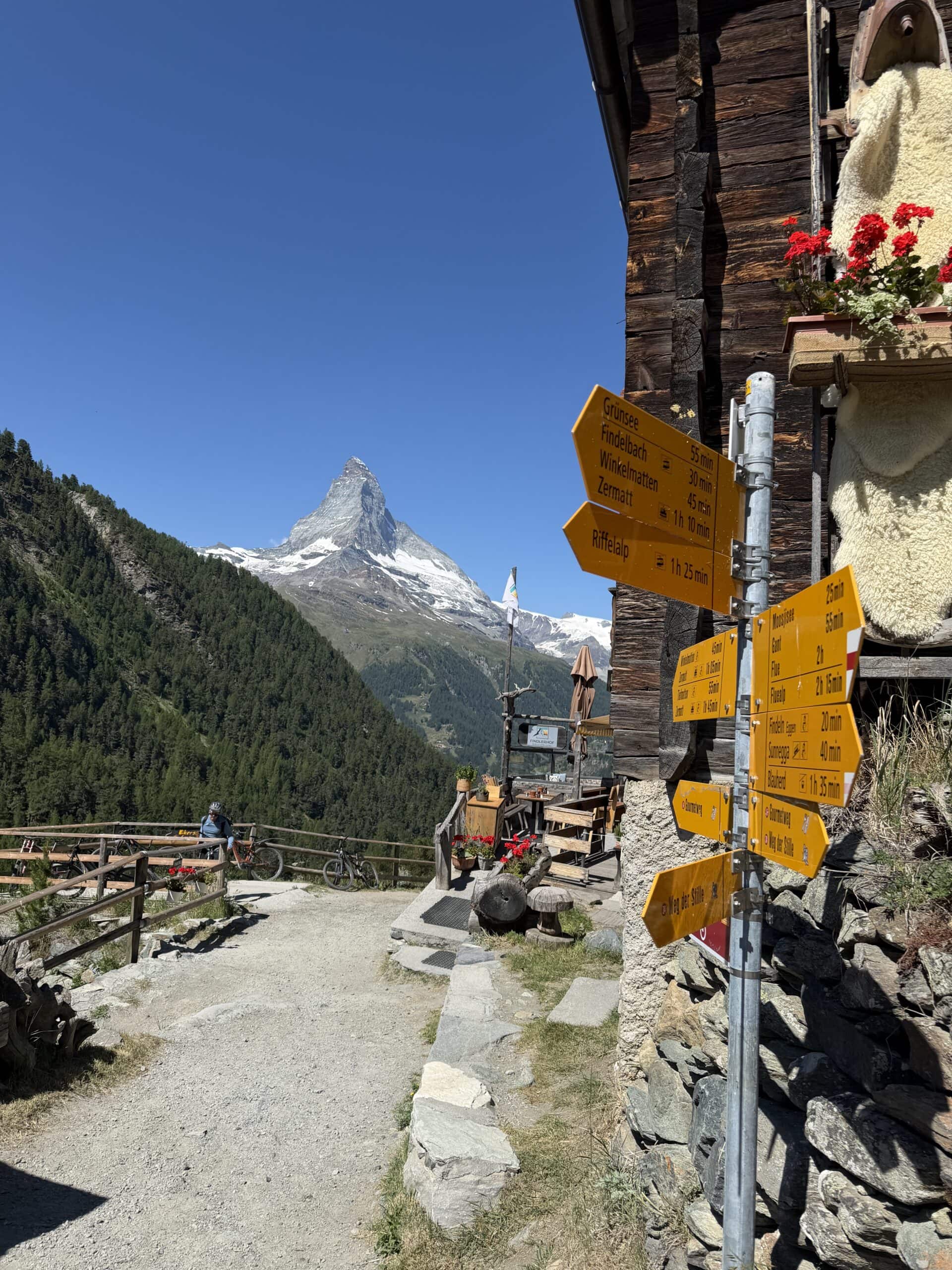
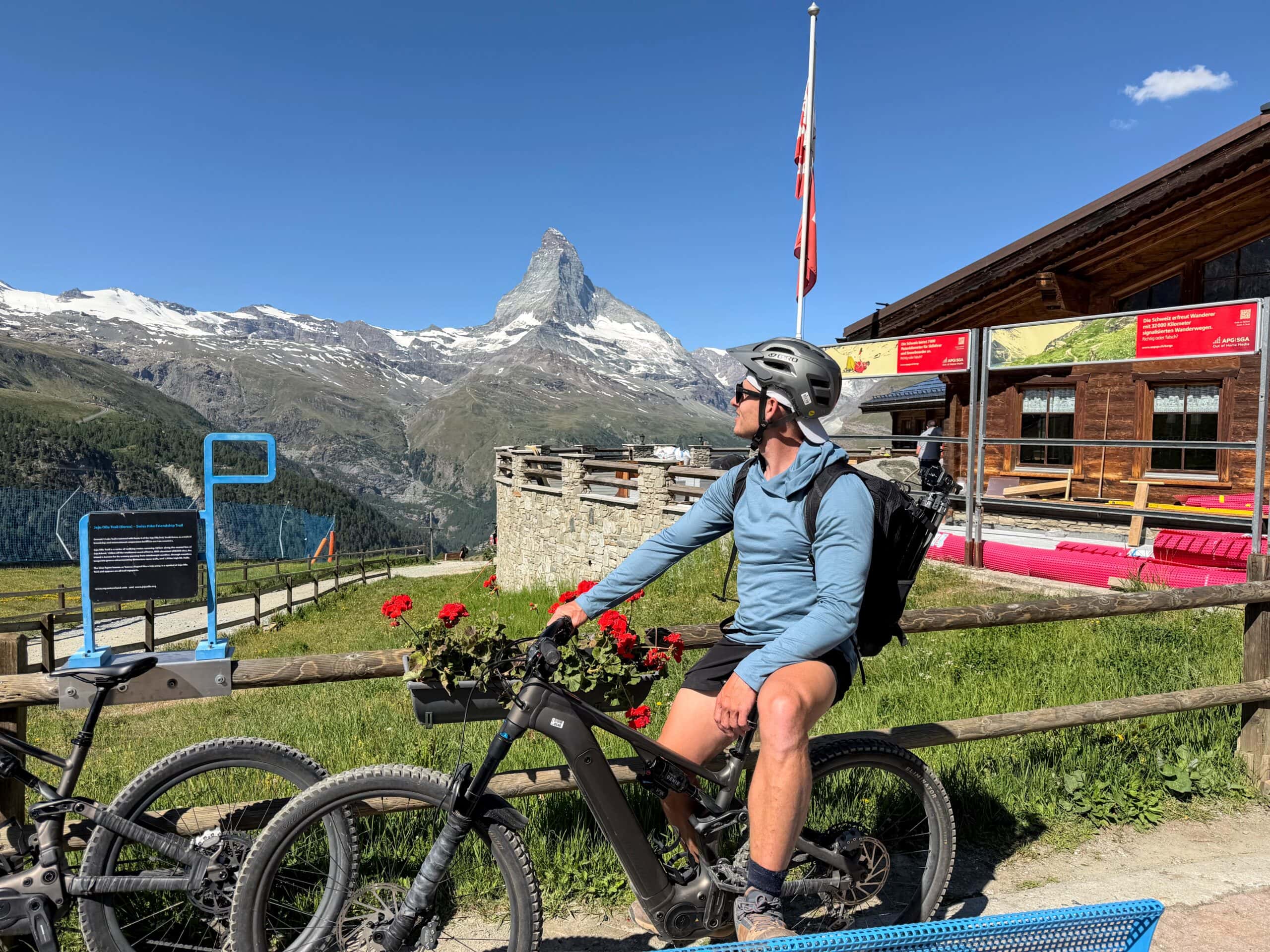
The 5 lakes trail is a 11.3 km loop with about 250m of elevation gain. There are several variations and you don’t need to do the whole circuit. The most important lake for us was Stellisee so we just made a beeline there and had the entire lake to ourselves. The way we did it from Blauherd station was about 4 km return.
Gornergrat and Riffelsee Train (optional)
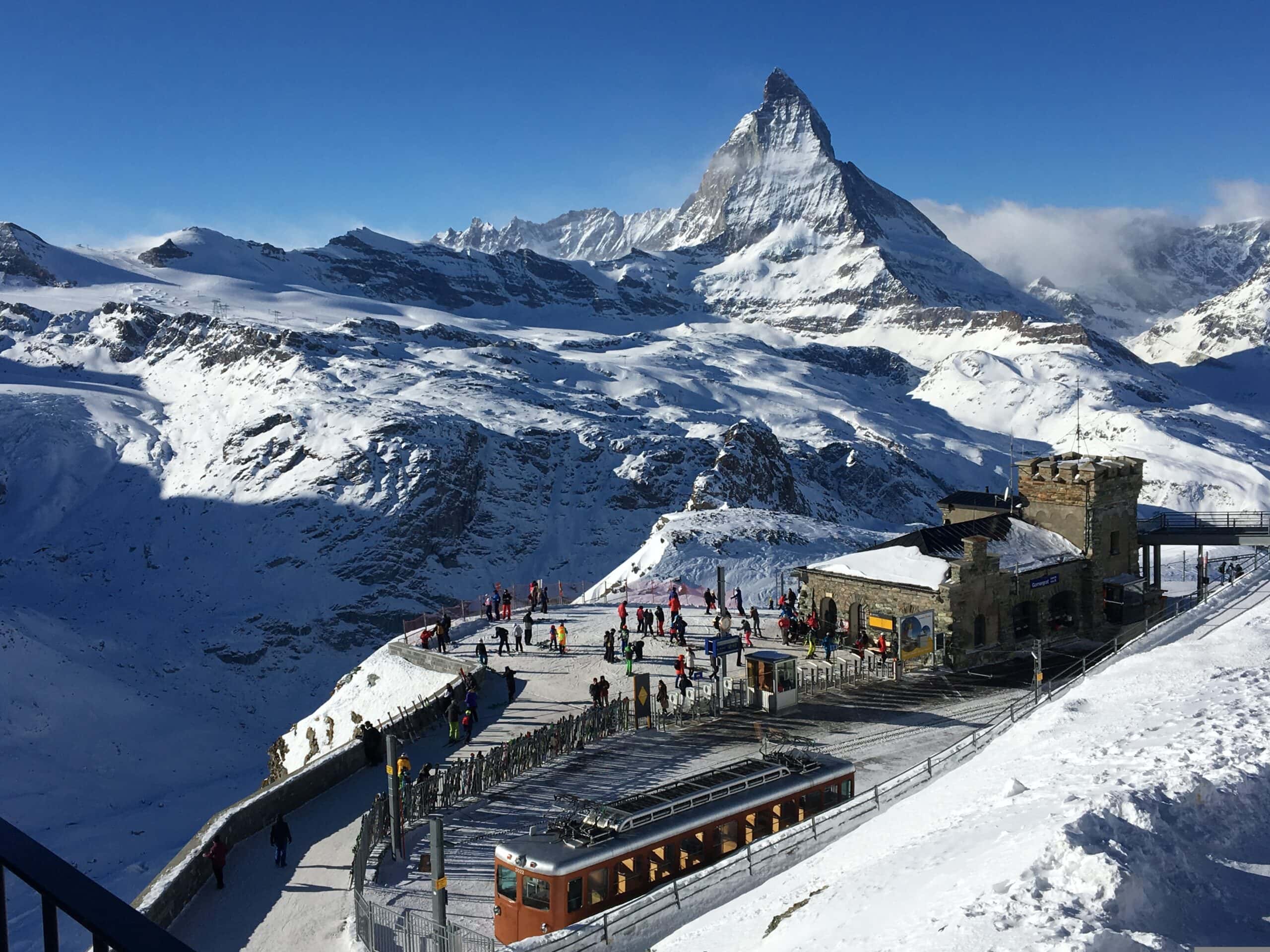
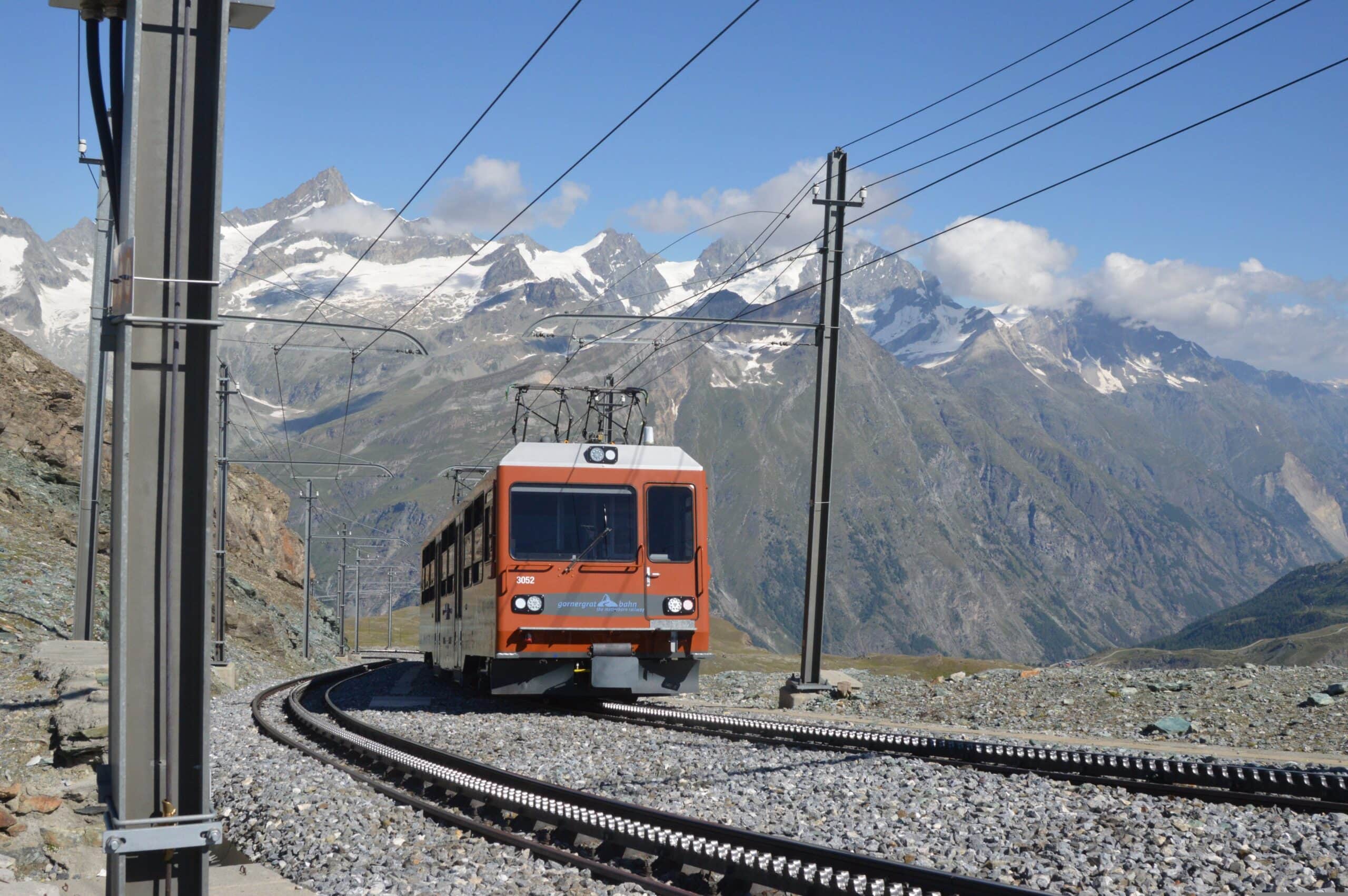
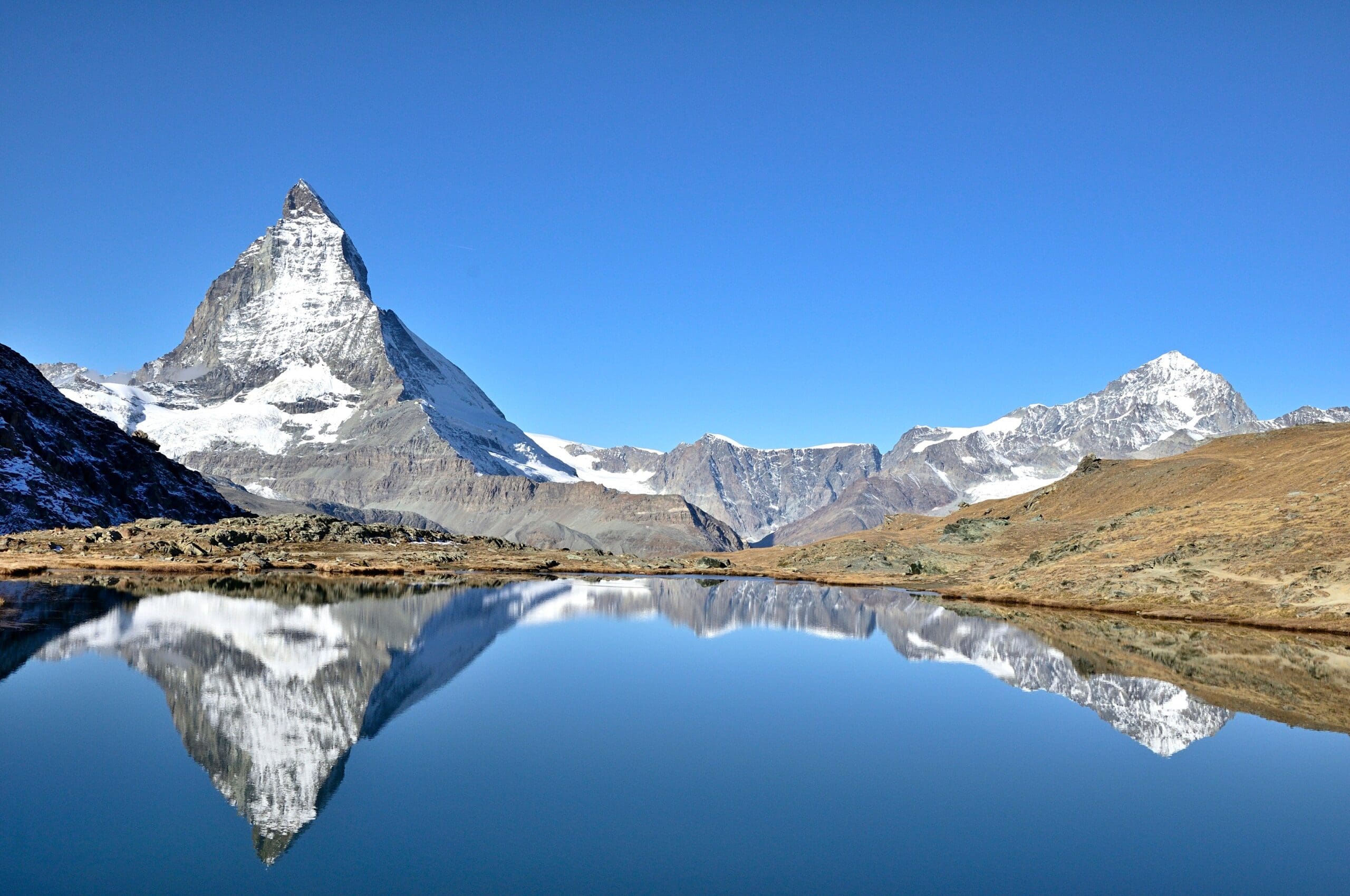
If hiking isn’t your thing but you still want phenomenal views the Gornergrat Cog train leaves right from Zermatt town and takes you straight to the Swiss alpine world at 3100 m. If you get off at the Rotenboden station Riffelsee (reflection lake) is only a 10 minute-walk away.
Don’t want to hike or bike but still want incredible views? Head up Gornergrat
Gornergrat train offers a sunrise option every Sunday in July, August and September for 132 CHF.
Return to Zermatt
Whichever you choose, head back to Zermatt and enjoy your final evening. We recommend sunset hot tub and Fondue.
Best Photo Spots in Zermatt
Kirchbrücke
Stellisee
Gornergrat
Riffelsee
Zermatt Town
Essential Tips for Visiting Zermatt
Book Mountain Transport in Advance
Popular lifts and the Gornergrat Railway can sell out during peak summer months, especially for sunrise departures. Book your tickets ahead of time to avoid missing out.
The main transport into town – train from Tasch to Zermatt runs constantly and does not sell out.
Start Hiking Early
Zermatt is popular. An early start means cooler temperatures, quieter trails, and the best chance to enjoy iconic spots like Stellisee before the crowds arrive.
Bring Layers
Mountain weather changes quickly in Zermatt. Even on warm summer days, temperatures can be close to freezing at higher elevations, so pack a waterproof jacket and warm layer.
Download Offline Maps
Cell service can be unreliable once you’re in the mountains. Download Google Maps or AllTrails offline before heading out so you can easily navigate the hiking trails.
Don’t Miss The Early Light
Watching the first light hit the Matterhorn is one of the most unforgettable experiences in Zermatt. Whether you hike, bike, catch an early lift, or watch from your room, it’s well worth the early alarm.
Frequently Asked Questions
Is Zermatt Worth Visiting?
Absolutely. Zermatt is one of the most beautiful destinations in Switzerland, with incredible Matterhorn views, world-class hiking, scenic mountain railways, and a charming car-free village. Whether you’re visiting for one day or a full week, it’s a place that deserves a spot on every Switzerland itinerary.
Is Two Days Enough in Zermatt?
Yes, two days is enough to experience Zermatt’s highlights. We spent two days exploring the Old Town, Gorner Gorge, Murini Viewpoint, Stellisee, and part of the Five Lakes Trail, and still had time to relax. If you’re planning several hikes, we’d recommend staying three or four days.
Can You Drive to Zermatt?
No. Zermatt is completely car-free. If you’re arriving by car, you’ll need to park in the nearby village of Täsch and take the 12-minute shuttle train into Zermatt.
What Is the Best Time to Visit Zermatt?
Summer (June to September) is the best time for hiking, mountain biking, and visiting lakes like Stellisee and Riffelsee. If you’re hoping to ski, visit between December and April for some of the best skiing in the Alps.
Where Should You Stay in Zermatt?
If your budget allows, we recommend staying somewhere with a Matterhorn view. Waking up to Switzerland’s most iconic mountain is an unforgettable experience and makes your trip feel even more special. We loved our time at Zermama.
Is Zermama Worth It?
We think so. We stayed in the Pool & Spa Suite and loved the private rooftop hot tub, plunge pool, and incredible Matterhorn views. It’s only a short walk from the train station, breakfast was excellent, and we’d happily stay here again.
Final Thoughts
You are already in Europe, so why not check out some of the other amazing places close by.
The Perfect Northern Italian Dolomites itinerary.
Zermatt connects everywhere amazingly by train, if beaches are more your vibe you are not far from the Iconic Cinque Terre.


